
Government Ensures Indonesia–US ART Will Strengthen National Export Position
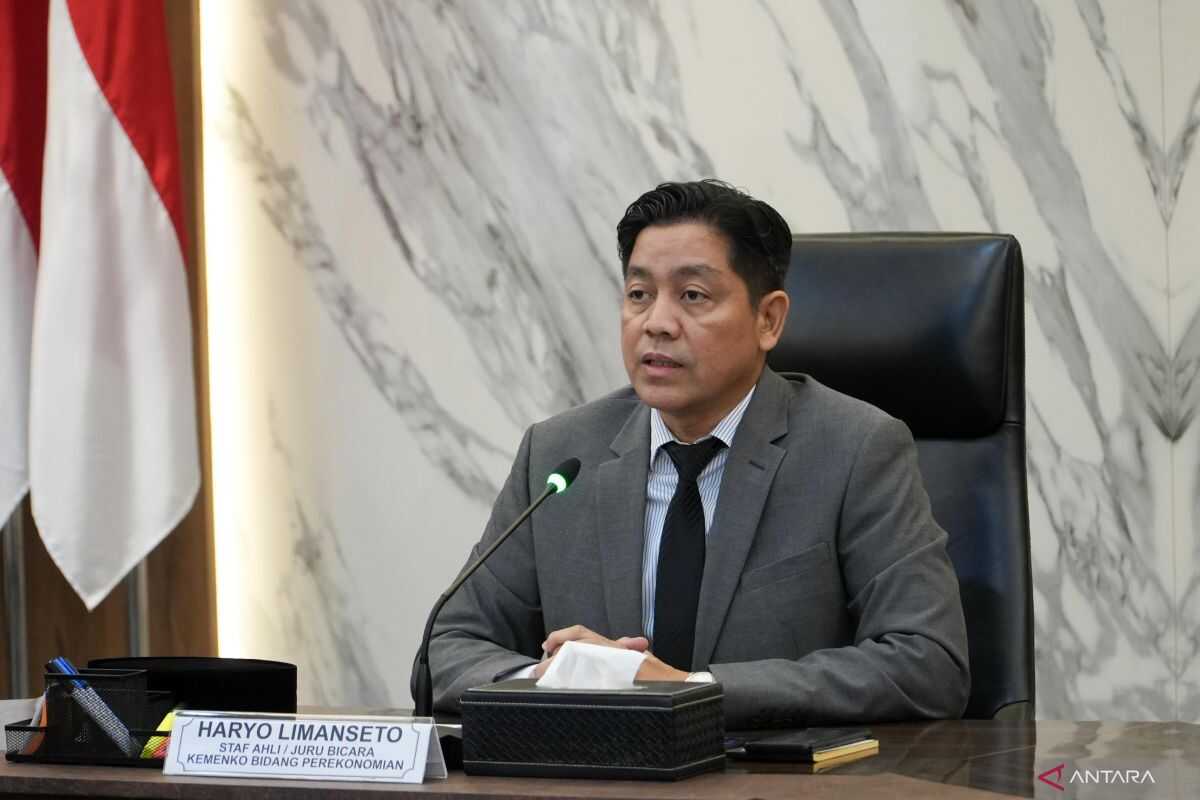
Jakarta (ANTARA) - The government emphasises that the Agreement on Reciprocal Trade (ART) between Indonesia and the United States is part of an economic diplomacy strategy to strengthen access to national export markets. The agreement also serves as a response to various non-tariff barriers highlighted in the bilateral trading relationship. The spokesperson for the Coordinating Ministry for Economic Affairs, Haryo Limanseto, said in a Jakarta briefing on Wednesday that the new agreement will take effect after domestic ratification procedures in accordance with applicable laws. ‘The agreement will enter into force 90 days after both countries have notified each other in writing that all domestic legal procedures have been completed,’ he said. The process begins with submission to the DPR RI for ratification approval if required, or through the issuance of a Presidential Regulation (Perpres) if such approval is not necessary. ‘Indonesia and the US have also agreed to establish a bilateral consultation mechanism to discuss issues related to the implementation of ART,’ he added. Regarding concrete impacts, Indonesia is seen as gaining significant benefits by securing several crucial items, including 0% tariffs on 1,819 tariff lines of agricultural products and important industries. These products include palm oil (CPO), coffee, cacao, spices, rubber, electronic components and aircraft components, as well as 0% tariffs for Indonesian textiles and apparel. The policy is expected to yield tangible benefits for more than 4 million workers in related sectors. Furthermore, Haryo explained that the agreement does not contradict Indonesia’s foreign policy principle of being free and active. Indonesia remains not bound by any bloc of power and retains full sovereignty in determining national policy. On the other hand, Indonesia also remains actively engaged with various trade partners through bilateral, regional, and multilateral agreements. In its implementation, ART provisions will continue to respect sovereignty and the national legal process in Indonesia. There is no automatic or unconditional obligation for Indonesia to adopt US policies in the future. The commitments agreed upon by both sides are coordinative and encourage alignment, with every decision still through domestic processes in accordance with national law and the Indonesian constitutional mechanism. In addition, both parties have equal rights to terminate the agreement by written notice after consultations, so the entire arrangement under ART remains within sovereignty and national interests. The government also considers domestic political dynamics in the United States, including developments of the US Supreme Court (SCOTUS) ruling, in the ART negotiations. The signing of ART is regarded as a strategic step to anticipate the uncertainty of US tariff policies, given that tariffs remain a primary instrument in trade policy and could be used under various legal bases other than the IEEPA. Looking ahead, said Haryo, the US Government still has a number of other legal instruments to impose tariffs and plans to launch various investigations into the trade practices of its partner country. In this context, Indonesia’s position is considered better managed because a number of issues that could become objects of investigation have already been negotiated and agreed in advance within the ART framework. ‘The Indonesian government will, of course, continue to carefully monitor global geopolitical situations and proceed cautiously with the process needed to implement the ART agreement,’ Haryo added.