
Government Ensures Halal Product Certification for US Goods Aligns with Sharia and National Regulation
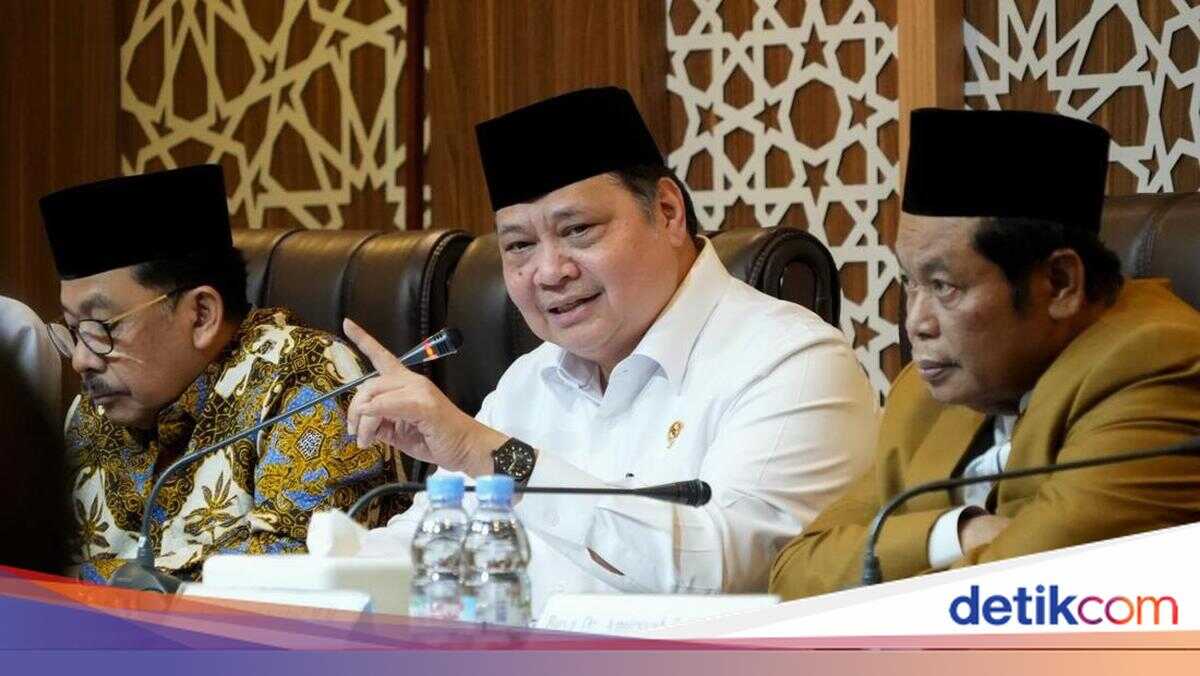
The government reaffirmed its commitment to ensuring that national interests remain protected in every trade agreement, including aspects of halal that are anchored in consumer protection, business certainty, and the strengthening of industrial competitiveness. Coordinating Minister for Economic Affairs Airlangga Hartarto discussed the Agreement on Reciprocal Trade (ART) between Indonesia and the United States to ensure it remains within the framework of Sharia compliance and national regulations on the Halal Product Assurance (JPH). The government stressed that the interests of the people and national economic sovereignty are well safeguarded.
‘Halal is a matter of utmost importance, particularly for foods and beverages entering Indonesia. The halal mechanism also involves the Mutual Recognition Agreement (MRA) that has already been recognised by Indonesia. Therefore imported goods, especially foods and beverages, are guaranteed to be halal,’ Airlangga said in his briefing on Wednesday, 4 March 2026.
This was disclosed by Airlangga at a meeting with the leadership of the Indonesian Ulema Council (MUI) at Buya Hamka Hall, MUI Central Office, Jakarta, on Tuesday 3 March.
In addition, Indonesia and the United States already have an MRA arrangement. Indonesia recognises halal certificates issued by foreign halal bodies (LHLN) in the United States, provided that these bodies are recognised and accredited by BPJPH. Currently, five LHLNs in the United States have obtained a Recognition Agreement from BPJPH, namely IFANCA, AHF, ISA, HTO, and ISWA through the Halal Certification Department.
During the meeting, Airlangga also noted that there are around 38 countries with MRA schemes with Indonesia. Under this mechanism, products from those countries that have been certified halal by recognised bodies may enter Indonesia directly without a double-certification process.
For agricultural products, specifically meat and slaughtered products, Indonesia accepts halal slaughter practices from the United States that comply with Islamic law or with the standards of the SMIIC (Standards and Metrology Institute for Islamic Countries) under the OKI. These standards have harmonised halal rules and metrology globally. BPJPH has also conducted direct audits of halal bodies there to ensure compliance.
‘To be sure, the government remains committed to coordinating with the Indonesian Ulema Council as the main umbrella for halal certification in Indonesia,’ concluded Airlangga.
For information, those present also included the Minister of Agrarian and Spatial Planning/National Land Agency Nusron Wahid, Deputy Chairman of the MUI Dr. K.H. Marsudi Syuhud, Secretary General of the MUI Buya Dr. Amirsyah Tambunan, Secretary of the MUI Advisory Board K.H Zainut Tauhid Sa’adi, Chairman of the MUI K.H Asrorun Ni’am Sholeh, Secretary of the Coordinating Ministry for Economic Affairs Susiwijono Moegiarso, Deputy for Coordination of Economic Cooperation and Investment at the Coordinating Ministry for Economic Affairs Edi Prio Pambudi, Senior Advisor for Productivity and Economic Competitiveness Development at the Coordinating Ministry for Economic Affairs Evita Manthovani, and other members of the MUI leadership and Advisory Board.