
Government emphasises balance between national security and journalism
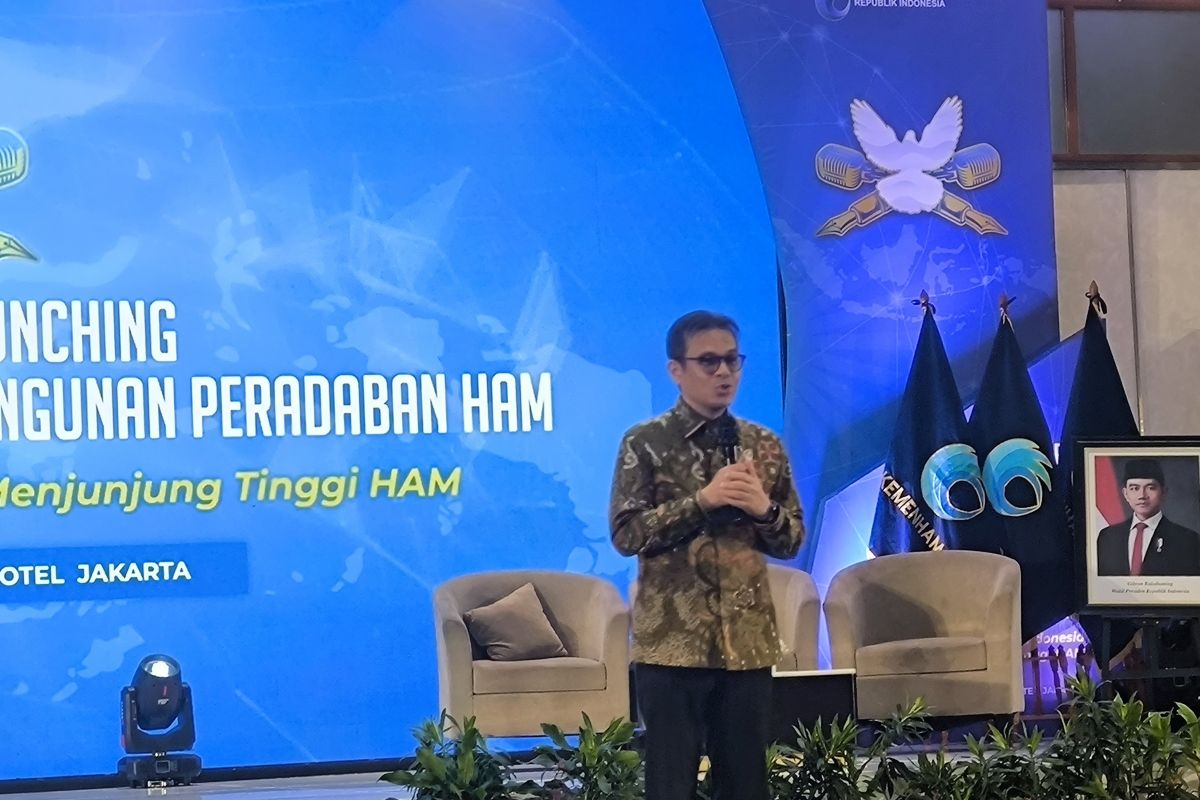
Jakarta — The Indonesian government has emphasised the importance of maintaining balance between national security and civil liberties in managing digital space, whilst strengthening the role of quality journalism to counter the proliferation of disinformation on social media.
Deputy Minister of Communication and Digital Affairs Nezar Patria stated that press freedom in Indonesia has strong legal foundations through the constitution and Law Number 40 of 1999 on the Press.
“Press freedom is guaranteed not only by the constitution but also by Law Number 40 of 1999 on the Press,” Nezar said during the Kick Off and Launch of the Press and Media Programme for the Development of Human Rights Civilisation in Jakarta on Wednesday.
According to him, the law eliminated censorship of the press whilst providing space for media to implement self-regulatory mechanisms through the Press Council.
“There is no longer censorship of the press, and the press has the right to regulate its own regime through a self-regulatory body called the Press Council,” he stated.
However, amid digital disruption, the government faces challenges in maintaining freedom of expression whilst ensuring social stability and national security in an increasingly complex information ecosystem.
“The government must balance national security and civil liberties,” Nezar said.
He noted that if policies overly emphasise national security aspects, civil liberties risk being eroded, whilst if freedoms are too loosely applied, social stability and national security could be compromised.
Digital technology has also transformed how information is distributed and how public opinion is formed in society. According to Nezar, social media is no longer merely a space for information exchange but can shape public perception through various narratives circulating in the digital space.
“This is where what is wrong can become right, what is black can become white, all through perception-forming or social engineering on social media,” Nezar said.
He explained that information manipulation occurs not only in Indonesia but globally, particularly during crises or conflicts often accompanied by the spread of misleading information.
“Social media is often filled with fake news, disinformation, and various forms of information manipulation,” he stated.
In these circumstances, the presence of mainstream media practising professional journalism is increasingly important for verifying and clarifying information circulating in public discourse.
“For this reason, we again long for the role of mainstream media that upholds quality journalism to clarify information on social media,” Nezar said.
He added that professional journalism prioritises accuracy as a fundamental principle, ensuring that reports produced can serve as a public reference for understanding various social issues, including human rights concerns.