
Government Drives Iron and Steel Industry as Lever for High Value-Added Exports
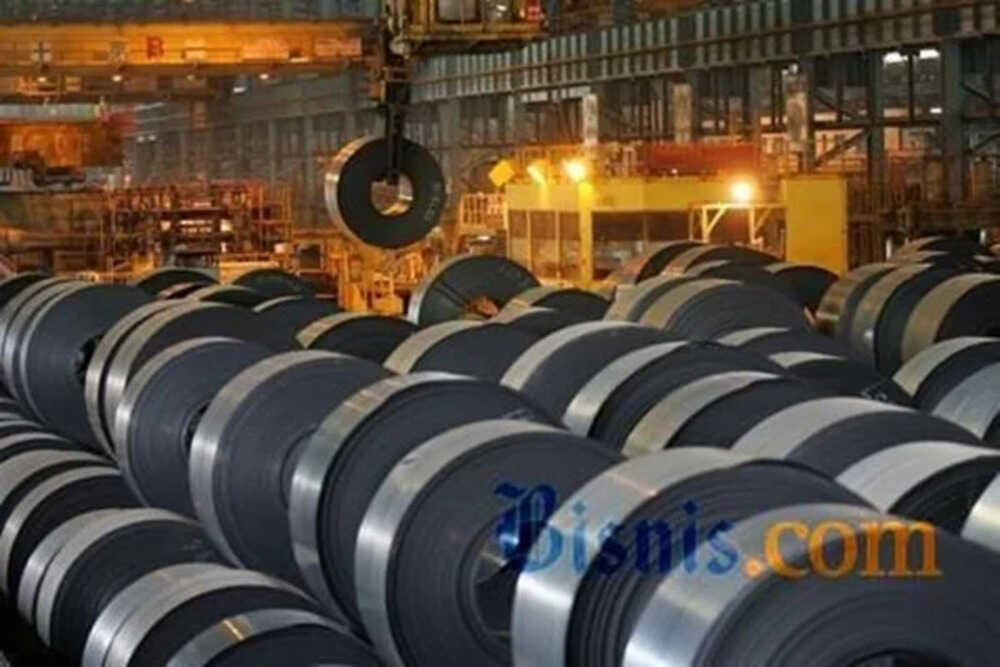
Bisnis.com, JAKARTA — The government is promoting the iron and steel industry as a lever for productivity and high value-added exports.
Deputy for Investment Planning at the Ministry of Investment and Downstreaming/BKPM, Dedi Latip, said that in line with the government’s policy to transform the economy from primary sector industries to value-added downstream industries, investment flowing into the base metals, metal goods (excluding machinery and equipment) sector increased by 152%, from Rp94.6 trillion in 2020 to Rp238.4 trillion in 2024.
“Iron and steel is one of eleven national priority commodities in the strategic downstreaming agenda. This is not merely a construction material — it is the foundation of industrialisation,” he said, as reported by Antara on Monday (2/6/2025).
President Prabowo Subianto’s economic growth target is 8% per annum during the 2025–2029 period. Achieving this target requires investment worth Rp13,032 trillion, with the private sector accounting for 86.6%.
BKPM projects that the base metals sector will become one of the main pillars, including iron and steel, where national consumption is expected to surge to 100 million tonnes per year by 2045.
“We have also drawn up the steel downstreaming roadmap 2023–2029, which sets production capacity targets and expansion from upstream — namely billet and slab — through to downstream products such as plate, HRC, pipe and wire mesh. In the first phase, steel plate achieved 312.8% of target, steel slab 215%, and steel HRC 391%. On the downstream side, such as wire mesh and coated steel, achievement remains low and requires continued investment support,” he said.
Recognising that licensing remains a bugbear for industry players, the government through Law No. 6/2023 and Government Regulation 5/2021 introduced the concept of positive fictitious approval, whereby if a licence application is not processed within a specified period, it is deemed legally approved. BKPM now holds the authority to issue licences across 16 priority sectors through the risk-based Online Single Submission (OSS) one-stop system. Risk classification ranges from low to high.
“We must not impede investment with layer upon layer of administrative procedures. Now, if all requirements are complete, the licence is automatically issued through the OSS system,” he said.
To encourage further investment in the sector, BKPM has prepared fiscal incentives including tax holidays, tax allowances and raw material master lists. Additionally, the development of 25 Special Economic Zones (KEK) and more than 160 industrial estates across Indonesia serves as an important means of distributing iron and steel investment beyond Java.
Despite rising investment and production capacity, the iron and steel trade balance remains in deficit. National steel exports throughout 2023 amounted to only US$2.99 billion, whilst imports reached US$9.19 billion. This indicates that increased capacity has not yet been fully monetised into high-value export downstream products.
Dedi emphasised the importance of support from user sectors — from automotive and maritime to defence — in absorbing domestically produced steel.