
Government Drafting Rules for Flying Cars, Here's the Leaked Information
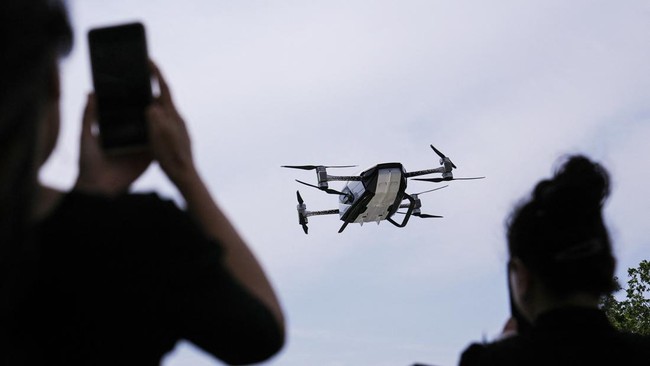
The government is seriously preparing a regulatory framework to anticipate the arrival of future transportation technologies such as drones to flying cars. This step is part of efforts to adapt to technological disruptions that are developing very rapidly in the global transportation sector. The government ensures that the actual regulatory foundation has already begun to form through various existing rules. The next focus is to accelerate the certification and validation process for the technology so that it can be implemented widely as soon as possible. This development is also directed to support connectivity, especially in remote areas. Director General of Air Transport, Ministry of Transportation, Lukman F Laisa, stated that the government already has several technical regulations governing both the product and operator sides. This becomes an important foundation before the technology is used widely. “I see advanced air mobility this way; if the regulations are already in place at DKPPU (Directorate of Airworthiness and Aircraft Operations) regarding this evacuation, we already have CASR (Civil Aviation Safety Regulation). CASR is plentiful; there’s CASR 22, CASR 107 for aircraft products, and for operators, we already have regulations like CASR 61 and CASR 65,” he told CNBC Indonesia, quoted on Monday (13/4/2026). In addition, airspace management has also been prepared through applicable regulations. This shows that readiness is not only from the device side but also from the operational side. With this foundation, technology development is considered just waiting for accelerated implementation. “Then in the air, it’s regulated through PM number 37 of 2020. So, unmanned aircraft airspace is already regulated; we already have the rules,” Lukman said. The next step is to accelerate technology certification, especially those coming from abroad. Cooperation with China’s aviation authority becomes one of the keys in this process. The government wants to ensure that entering technology can be used immediately without ignoring safety aspects. “Now what we’re doing is we’re cooperating with CAAC China (Civil Aviation Administration of China) on how we certify or validate aircraft coming from China so that it’s faster,” Lukman said. This development is also directed to support logistics distribution in 3T regions. The use of drones is considered the most effective solution to reach difficult-to-access areas. Domestically, product development has also begun to progress. “Because we want to support logistics in 3T (Lagging, Frontier, Outermost), we need unmanned aircraft, and the most comfortable is using drones, and the concept is advanced air mobility. In Indonesia itself, there are already two products, perhaps PT DI or PT Inter. So everything is in process,” Lukman said.