
Government Distributes Green Funds of Rp5 Billion per Project, Here are the Requirements!
The Indonesian government, via the Environmental Fund Management Agency (BPDLH) of the Ministry of Finance, has once again opened funding for green innovations through the Innovation and Technology Fund (ITF) scheme. This time, the prepared budget allocation reaches 200,000 pounds sterling, or approximately Rp5 billion per approved proposal.
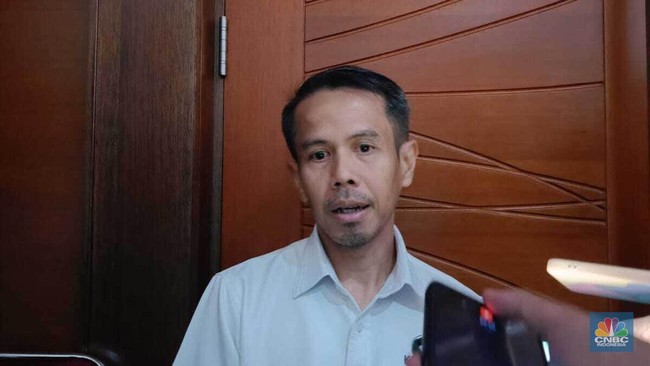
The Director of the Environmental Fund Management Agency (BPDLH) of the Ministry of Finance, Joko Tri Haryanto, explained that the second phase opening follows the high public interest in the first selection phase.
The Call for Proposals for the second phase has been open since 11 March and will run until 17 April 2026.
“It has been reopened for phase 2. Officially from 11 March to 17 April to invite all parties who did not have the opportunity in phase 1, hopefully they can enter phase 2,” said Joko during the Signing of the Cooperation Agreement Between BPDLH and LCDI-ITF Project Beneficiaries on Tuesday (14/4/2026).
Previously, there were 283 proposals submitted with a total funding commitment of Rp1.5 trillion in the first phase of the ITF Call for Proposals. However, only four projects were approved with funding disbursement of Rp20.3 billion.
In detail, BPDLH disbursed Rp5 billion for waste management at the Faculty of Animal Husbandry, Hasanuddin University in South Sulawesi; Rp4.9 billion for a marine and coastal ecosystem project by PT Venambak Kail Dipantara in West Nusa Tenggara Province.
Rp5 billion for an AFOLU sector project by PT Sinar Hijau Ventures in Maluku Province; and Rp5.3 billion for an AFOLU project by PT Jejak Enviro Teknologi in West Java Province.
For the second phase Call for Proposals, the ITF will focus only on the energy, transportation, AFOLU, marine ecosystems and coastal sectors. The waste sector has been eliminated.
In addition, BPDLH has reduced the proposing institutions to two categories only, namely civil society organisations and business entities, while universities have been excluded.
“Then the proposal proposers are only civil society organisations and then priority provinces become provinces with additional specific documents, especially for project technical preparation. Because from previous experience, this is what we often encounter,” he said.
As is known, the ITF is an initiative under the Low Carbon Development Initiative (LCDI) Phase 2, a collaboration between the Indonesian Government through BAPPENAS and the UK Government through the Foreign, Commonwealth and Development Office (FCDO) to encourage the development of innovative businesses that support low-carbon development in Indonesia.