
Government Discusses Regional Civil Service and Financial Management
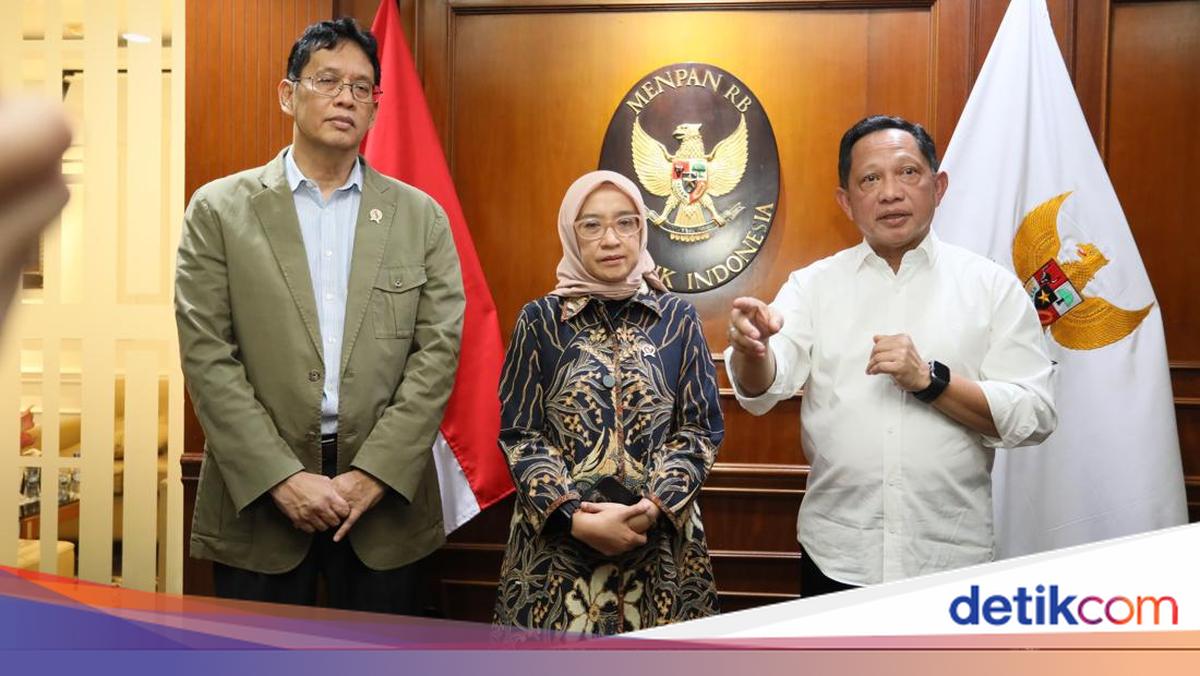
This meeting serves as a follow-up to recommendations from Commission II of the Indonesian House of Representatives and acts as a forum for policy synchronisation among three ministries to support the implementation of Law Number 1 of 2022 on Financial Relations between the Central Government and Regional Governments (HKPD). This is particularly aimed at ensuring that the reorganisation of regional government apparatus resources proceeds in harmony with regional fiscal capacity, governmental organisational needs, and guarantees of job certainty for Government Employees with Work Agreements (PPPK) across Indonesia. “Alhamdulillah, I am very grateful to the Minister for Administrative and Bureaucratic Reform and also to the Minister of Finance for the very productive and solution-oriented meeting earlier,” stated Tito in a written statement on Thursday (7/5/2026). Tito explained that his side had heard of dynamics in the regions regarding concerns over the implementation of the provisions of Article 146 of Law Number 1 of 2022 on HKPD. That regulation stipulates that regions allocate a maximum of 30 percent for employee expenditure. The provision will take effect in 2027. In response to this, Tito said the meeting produced several solutions. One of them concerns the transitional period for applying the maximum 30 percent limit, which will be extended and regulated in the revision of the State Revenue and Expenditure Budget (APBN) Law. “We use the APBN Law on par with the HKPD Law. Well, we apply the principle of lex posterior derogat legi priori. The later law overrides the previous one. That means regional heads no longer need to worry. Relax,” said Tito. Furthermore, Tito noted that regions with employee expenditure above 30 percent will be impacted in terms of realising expenditure for the public. To address this, he explained that the government, through the Minister of Finance, will design a programme involving local business communities. Through this effort, it is hoped that the regional economy will continue to thrive and directly benefit the public. “So, this will also reassure the public. That means, even if employee expenditure is high, programme expenditure activities for the public will still proceed, backed by the central government. I think this can be a very good solution this time. Thank you, Mr Minister of Finance, Madam Minister for Administrative and Bureaucratic Reform,” Tito concluded.