
Government Denies All US Products Exempt from Halal Certification, Says Food Rules Still Apply
The government has issued clarification regarding the reciprocal tariff agreement, formally known as the Agreement on Reciprocal Trade (ART), between Indonesia and the United States and its impact on halal product regulations. The government has affirmed that it is not exempting halal certification for all US products entering the country.
The clarification on halal certification was delivered by Coordinating Ministry for Economic Affairs spokesperson Haryo Limanseto in a Frequently Asked Questions document on the Indonesia-US Reciprocal Trade Agreement, as seen on Sunday (22/2/2026).
One of the points in the document addresses the question of whether the government is exempting halal certification for all US products. The government affirmed that halal certification for food and beverage products remains in effect.
“No. Indonesia continues to enforce halal certification for food and beverage products. Meanwhile, food and beverages containing non-halal content must be labelled as non-halal. This is done to protect domestic consumers,” said Haryo Limanseto in his statement on Sunday (22/2/2026).
He stated that cosmetic products, medical devices and manufactured goods entering from the US would still be subject to quality standards and detailed product information requirements. He said these standards are intended to ensure that domestic consumers remain informed about the details of the products they use.
“For cosmetics, medical devices and other manufactured products from the US, they will still be subject to product safety quality standards, good manufacturing practice, and detailed product content information. This is to ensure that consumers in Indonesia know in detail the products they will be using,” he said.
Haryo stated that Indonesia and the United States have a Mutual Recognition Agreement (MRA) with Foreign Halal Bodies (LHLN) in the United States. Consequently, he continued, halal labels issued in the US can be recognised as valid upon entry into Indonesia.
“This cooperation allows halal labels issued in the US to be recognised as valid in Indonesia. This is needed in line with the increasing demand in the Indonesian market for high-quality halal products, particularly meat products and other consumer goods from the US,” said Haryo.
Previously, Indonesia was reported to have agreed to relax halal regulations, particularly for products originating from the United States. This was done after both nations concluded a trade agreement on reciprocal tariffs (Agreements on Reciprocal Trade/ART).
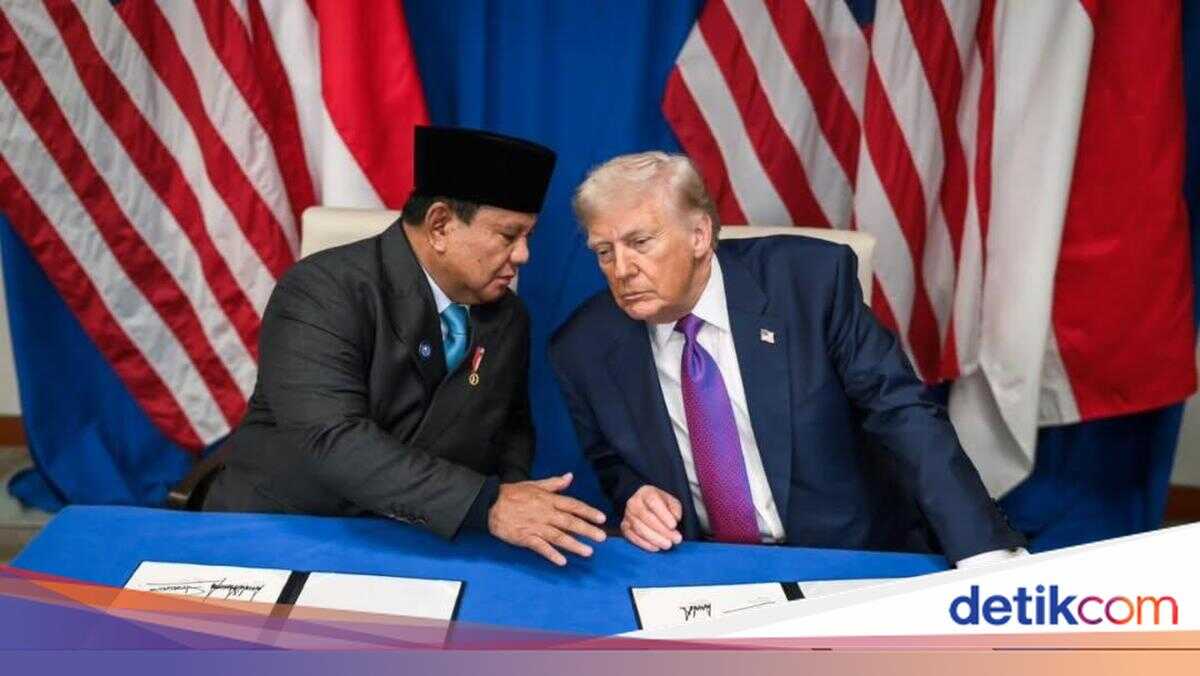
The agreement was signed directly by President Prabowo Subianto and US President Donald Trump in Washington on Thursday (20/2) local time. Following the signing at the head-of-state level, discussions on technical documents and ART annexes continued at the United States Trade Representative (USTR) office.
The agreement contains a number of new rules for bilateral trade, including on halal certification for US products. In the document titled ‘Agreement Between the United States of America and the Republic of Indonesia on Reciprocal Trade’, Annex III Article 2.9 explains that the relaxation of halal rules aims to facilitate exports of cosmetics, medical devices and other manufactured goods from the US.
“With the objective of facilitating the export of cosmetics, medical devices, and other manufactured goods that may be required to have halal certification, Indonesia shall exempt US products from any halal certification and halal labelling requirements,” the document states.
Furthermore, Indonesia must also exempt containers and other materials used to transport manufactured products from any halal certification and labelling requirements, except for containers and other materials used to transport food and beverages, cosmetics and pharmaceutical products.
“Indonesia shall not impose labelling or certification requirements for non-halal products,” reads the third point of Annex III Article 2.9.
In implementation, Indonesia must allow US halal certification bodies recognised by Indonesia’s halal authority to certify any product as halal for import into Indonesia without additional requirements or restrictions.
“Indonesia shall simplify the process of recognising United States halal certification bodies by Indonesia’s halal authority and accelerate the approval process,” the document continues.
As a note, for greater certainty, these provisions do not apply to obligations to include content or ingredient information on a product.