
Government Declares AI Adoption Mandatory Across All Sectors
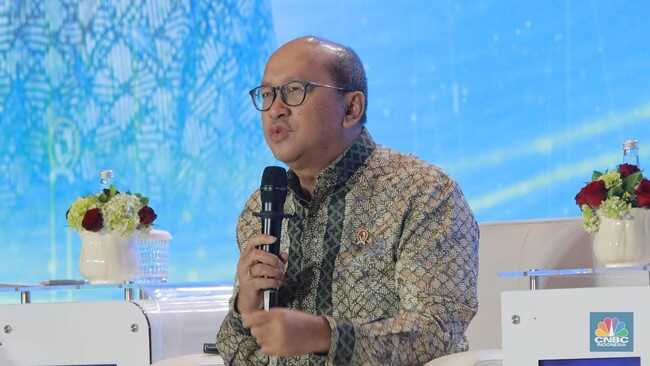
Jakarta, CNBC Indonesia - The government has confirmed that the use of Artificial Intelligence (AI) is now a necessity. The technology must be deployed across all sectors with the aim of achieving greater efficiency.
“From what I can see, the advancement of AI going forward is already a necessity. It must be implemented, even though for Indonesia we are still in the early stages,” said Investment and Downstream Industries Minister/Head of the Investment Coordinating Board (BKPM), Rosan Roeslani, at the Indonesia AI Day for Mining Industry event on Thursday (24/5/2025).
According to Rosan, AI can make industries more efficient, boost productivity, increase job creation, and generate greater competitiveness. At the same time, Rosan reminded that Indonesia has homework to do in developing AI, particularly regarding human resources capable of understanding and utilising AI technology.
“But we also have homework to do, namely how we bring our human resources closer to properly understanding and recognising the use of AI. That is also one of the challenges so that we can optimise AI adoption,” Rosan said.
At the same event, Deputy Minister of Communications and Digital Affairs (Komdigi) Nezar Patria said one of the key priorities is more creative innovation. Indonesia must also develop AI infrastructure going forward.
Nezar explained that his ministry is using a 3P formula to develop AI. The first is Policy — bridging policy gaps and providing legal certainty whilst not restricting innovation potential. In formulating regulations, the government is using a horizontal approach by adopting ethical principles and a vertical approach focused on technology adoption for each respective sector.
The second is People — developing human resources. Industry is being engaged to collaborate in improving domestic digital talent. “We have a fairly significant gap in digital talent. We are short of approximately 3 million digital workers annually, because the growth in demand and supply are not moving in tandem,” he explained.
The third is Platform, which focuses on creating technology adoption frameworks for collaboration among stakeholders, thereby fostering an inclusive AI ecosystem.
Indonesia is currently preparing regulations and a roadmap for AI. “Later, if it is not a ministerial regulation, it will likely take the form of a presidential regulation,” he said.