
Government Considers Presidential Regulation if Rising Oil Prices Squeeze Budget: Airlangga
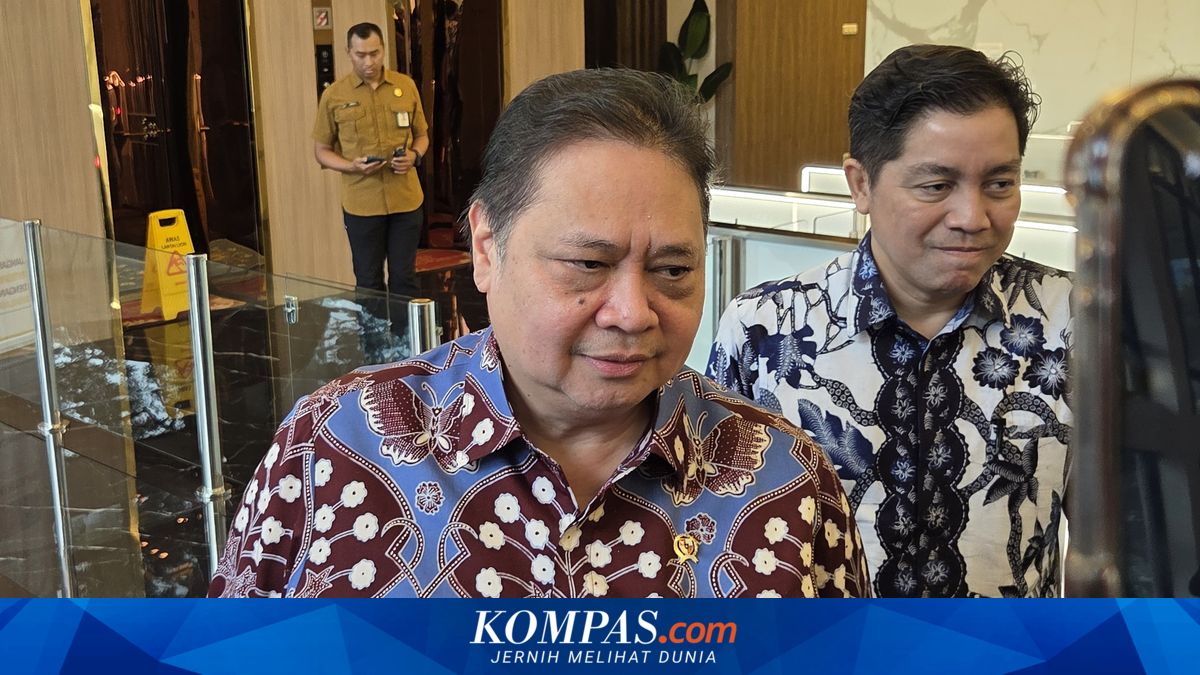
JAKARTA — The government has opened the possibility of issuing a Presidential Regulation in Lieu of Law (Perppu) to respond to pressure on the state budget if global oil prices continue to rise.
Coordinating Minister for Economic Affairs Airlangga Hartarto said various government simulations indicate the state budget deficit could potentially exceed the 3 per cent threshold if global oil prices increase over an extended period.
“This means that with various such scenarios, a 3 per cent budget deficit will be difficult to maintain unless spending cuts are made, which would also impact economic growth,” Airlangga said during a plenary session at the State Palace on Friday (13 March 2026).
According to him, a number of scenarios regarding the issuance of a Perppu would likely be discussed further in a limited government meeting. The scheme is now being reconsidered if global pressure on energy prices intensifies.
He stated that the initial draft contained several policy options that could be included in a Perppu. One involves providing emergency incentives in the form of income tax (PPh) and value-added tax (PPN) relief for affected business sectors, without needing to amend existing tax legislation.
Additionally, the government is considering exempting imports of certain raw materials to keep export activity running amid global turbulence. Another option involves postponing tax obligations for micro, small, and medium-sized enterprises (SMEs) and industries with high energy consumption.
On the other hand, the government also sees opportunities for additional state revenue from surging global commodity prices. Airlangga explained that when energy prices rise, several commodities such as crude palm oil (CPO), nickel, gold, and copper typically experience price increases as well.
These conditions could generate windfall or additional state revenue, particularly from non-tax state revenue (PNBP) from the oil and gas sector and commodities.
From a budgeting and financing perspective, a Perppu could also provide room for the government to expand the state budget deficit above the 3 per cent threshold if necessary. Additionally, the government could adjust budgets across programmes without requiring parliamentary approval, thus providing greater flexibility in responding to emergency conditions.
Airlangga added that through this scheme the government could also continue various social protection programmes, such as direct energy cash transfers and emergency social assistance should the economic situation deteriorate.
For additional financing, the government also has the option of issuing State Securities (SBN) and utilising surplus budget allocations (SAL) available in state coffers.
“The government requests the President’s guidance for scheduling a special time to discuss and prepare these scenarios in greater detail,” Airlangga said.