
Government Claims Some Countries Jealous of Indonesian Palm Oil Due to Inability to Compete
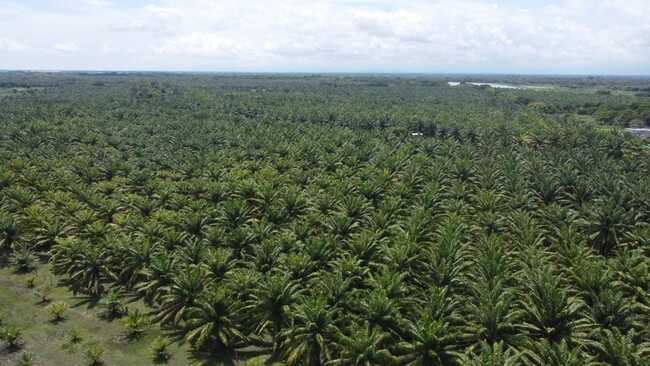
Jakarta, CNBC Indonesia - Indonesia’s palm oil industry continues to face various negative campaigns at the global level. The government views these attacks as stemming from the strategic position of Indonesian palm oil, which is difficult for other countries to rival.
Hendratmojo Bagus Hudoro, Director of Plantation Protection at the Directorate General of Plantations, Ministry of Agriculture of the Republic of Indonesia, stated that various issues attacking palm oil frequently emerge given the commodity’s significant contribution to the national economy.
According to him, the emergence of various criticisms towards palm oil can also be viewed as a form of jealousy from parties unable to rival the commodity’s advantages.
“There are many issues about palm oil that emerge. We think positively that it is because there are parties jealous of us,” he said during a Palm Oil Equality discussion at the Ministry of Agriculture on Monday (2 March 2026).
He explained that such jealousy can manifest in two forms, namely negative and positive jealousy.
“There is negative jealousy and positive jealousy. Negative jealousy is when other parties are unable to rival palm oil and therefore seek ways to weaken it. There are also those who are actually interested and want to develop palm oil, but do not yet have the capacity to compete with Indonesia,” Hendratmojo said.
He exemplified that the palm oil plant actually originated from the African continent, but its development has not been as significant elsewhere as in Indonesia.
Several other countries are also said to be beginning to attempt to expand palm oil development, although the results have not been significant.
He assessed that as long as Indonesia’s palm oil industry remains strong and competitive, various negative issues will likely continue to emerge.
“As long as our palm oil still exists and remains strong, issues like this will not stop,” he said.
Several campaigns that frequently emerge include those concerning environmental issues, deforestation, and allegations of labour exploitation.
Government encourages downstream palm oil development
The government is promoting the development of downstream palm oil industries to increase value-added and broaden the economic impact of the commodity. To date, the palm oil industry has largely relied on the production of crude palm oil (CPO).
The development of palm oil derivative products represents an important step so that Indonesia is not solely an exporter of raw materials.
“Thus far, our orientation has largely focused on CPO and cooking oil. However, the opportunities for developing derivative products remain very substantial,” Hendratmojo added.
“Going forward, we will promote the development of derivative products such as pharmaceuticals, cosmetics, sanitation products, and fuel,” he said.
Besides increasing value-added, downstream development is also viewed as capable of opening new employment opportunities.
“To date, palm oil workers are mostly in the upstream sector such as plantations. If the downstream industry develops, new employment opportunities will emerge in the manufacturing sector,” Bagus said.