
Government Candidly Reveals Reasons for Low National Sugarcane Productivity
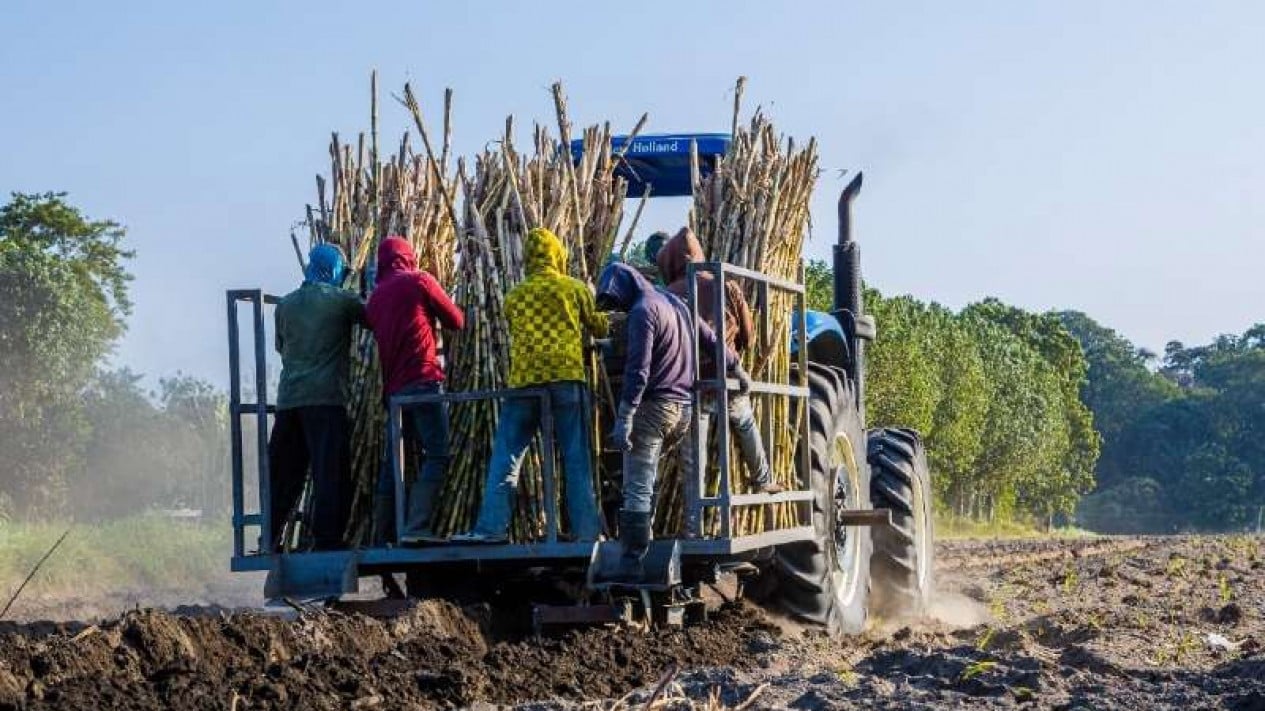
The government has implemented various strategic steps towards achieving self-sufficiency in consumption sugar by 2028. For 2026, the Ministry of Agriculture has set a target of 3 million tons of consumption sugar.
Director of Plantation Product Downstreaming at the Ministry of Agriculture, Kuntoro Boga Andri, explained that Holding Pangan ID Food, together with PT Sinergi Gula Nusantara (SGN), has also consolidated the national sugar industry by integrating 36 sugar mills from Sumatra to Sulawesi.
“In order to achieve that target, the government is relying on land expansion and productivity improvements,” Kuntoro stated in his remarks on Saturday, 18 April 2026.
“The plantation downstream programme, which includes targets for sugarcane rejuvenation (ratoon dismantling) and opening new land areas of 200,000 hectares in 2025 and 2026, is being continuously promoted, although its realisation still faces challenges in the field,” he said.
This policy is reinforced by Presidential Regulation No. 40/2023 on Accelerating National Sugar Self-Sufficiency and Bioethanol Provision, as well as the release of high-yielding superior sugarcane varieties.
“From the trade aspect, setting a reference price of Rp 14,500 per kg at the producer level and Rp 17,500 per kg at the consumer level is expected to maintain a balance between incentives for farmers and affordability for the public,” Kuntoro stated.
However, behind this optimism, structural challenges still loom. National sugarcane productivity is relatively low, with an average sugar production of around 4.74 tons per hectare, far below historical achievements.
The causes are varied, ranging from ageing sugarcane plantations, limited superior seeds, suboptimal cultivation practices, to limitations in irrigation infrastructure and access to financing.
“On the downstream side, many sugar mills are old with low rendements, so even though mill revitalisation is being intensified through state capital injections, performance improvements are not yet maximal without quality sugarcane supplies,” he said.
Previously, ID Food’s President Director, Ghimoyo, openly revealed that the quality of sugar produced by the state-owned food company is currently not optimal. “This is caused by the condition of the old sugar mills owned by the SOE,” Ghimoyo said.
Separately, Lecturer in the Development Economics Programme at FBE UAJY and Secretary of ISEI Yogyakarta Branch, Yuvensius Sri Susilo, explained that ID Food’s sugar quality is not as good as that produced by private sugar mills.