
Government builds volcanic material flow control structures for Mount Semeru
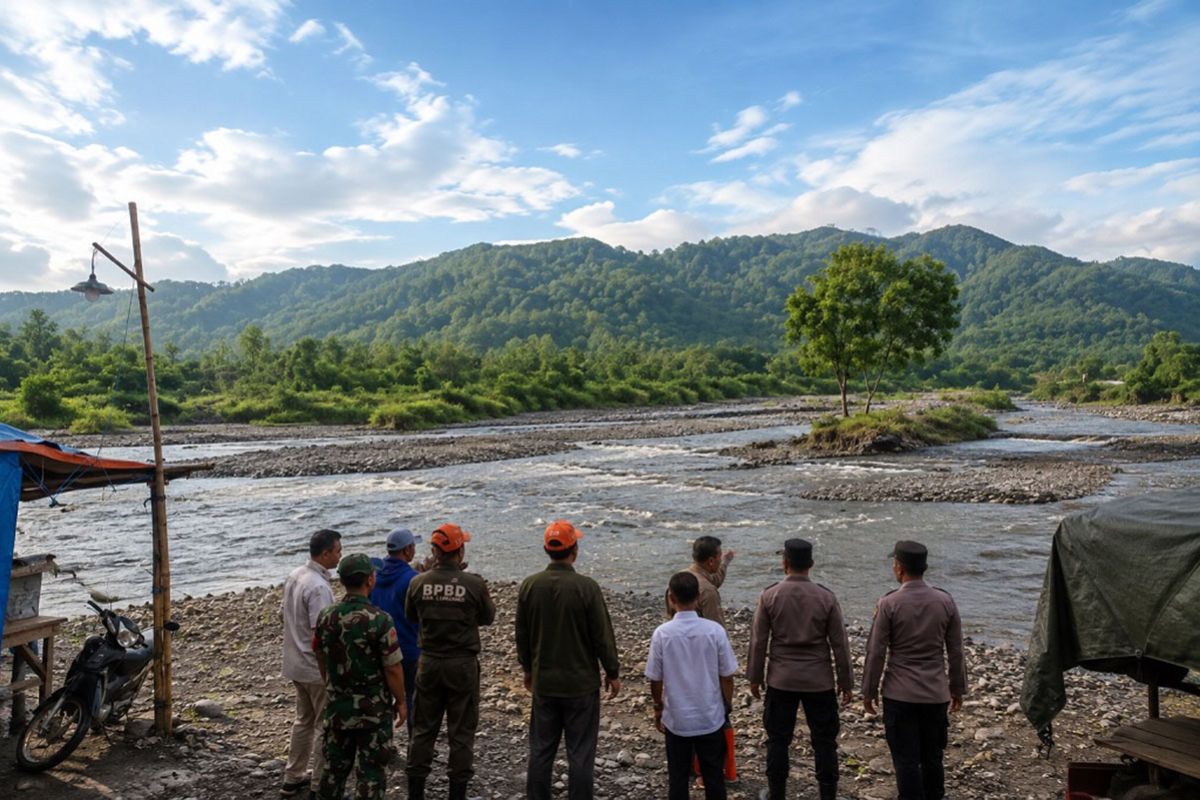
The central government, through the Brantas River Basin Agency (BBWS), has built infrastructure to control volcanic material flows from Mount Semeru in Curahpetung Village and Supiturang Village, Lumajang Regency, East Java.
“A protective embankment has been constructed in Curah Lengkong Hamlet, Curahpetung Village, and two check dam units in Supiturang Village have been erected as part of measures to reduce disaster risk for the community,” said Isnugroho, Head of the Lumajang Regional Disaster Management Agency (BPBD), in Lumajang on Monday.
He said the infrastructure is an important part of efforts to reduce disaster risk, particularly in areas located along volcanic material flow paths.
“The central government, through BBWS, is moving proactively to strengthen disaster mitigation infrastructure in areas prone to Mount Semeru eruptions,” he said.
“Its presence is expected to help hold back or slow volcanic material flows, so that the potential impact on areas along the flow path can be reduced,” he added.
Isnugroho explained that the risk to anticipate is when high-intensity rainfall occurs in the upper reaches of Semeru, which can increase the potential for lahar flows. Therefore, the physical infrastructure still needs to be supported by community preparedness and monitoring of disaster conditions.
“With this infrastructure, volcanic material flows are expected to be more controlled so that the potential impact on residential areas and community activities can be reduced,” he said.
For this reason, the public still needs to understand their living environment, recognise disaster threat paths and potentials, and follow official information from the government and disaster officers.
“The construction of embankments and check dams is also part of long-term efforts to build regional resilience. The infrastructure is expected to provide additional protection, while helping the community carry out social and economic activities with better preparedness,” he said.
He said mitigation must be carried out before a disaster occurs through a combination of infrastructure strengthening, community preparedness, and cross-sector coordination. With these integrated mitigation measures, Lumajang is now far more resilient in facing the potential dangers of Semeru.
For communities in Semeru disaster-prone areas, the construction serves as a reminder that safety is a shared responsibility. Mitigation infrastructure provides additional protection, while public vigilance and preparedness remain key in facing potential disasters.