
Government Bans Schools from Assigning Excessive Homework During Ramadan
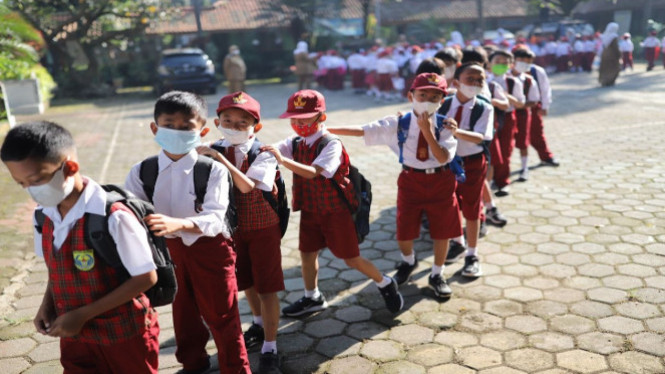
Jakarta, VIVA – The government has determined that 1 Ramadan 1447 H falls on Thursday, 19 February 2026. With the start of the holy month of Ramadan, teaching and learning activities in schools will be adjusted accordingly.
During Ramadan, the government has affirmed that schools must not assign excessive homework, so that students can observe their religious duties comfortably. This provision is set out in a Joint Circular Letter (SEB) from the Minister of Primary and Secondary Education, the Minister of Religious Affairs, and the Minister of Home Affairs concerning Learning During Ramadan 2026. The circular also regulates learning during Ramadan 2026 to be more flexible and suited to students’ needs.
“Independent learning activities during Ramadan are expected not to burden students with excessive homework or projects, particularly those requiring significant additional costs or intensive use of devices and the internet. Should educational institutions assign tasks, such assignments are expected to be simple, enjoyable, completable with family, and not impose financial burdens on parents. Outputs may take the form of journals or Ramadan pocket books whilst reducing internet usage,” the circular states, as quoted from the official Ministry of Primary and Secondary Education website on Wednesday, 18 February 2026.
Beyond this, the circular also regulates the learning schedule during Ramadan. On 18, 19, 20, and 21 February 2026, learning activities are to be conducted independently within family settings, places of worship, and the community, in accordance with assignments from schools, madrasahs, early childhood education units, and religious education institutions. Meanwhile, face-to-face learning resumes from 23 February through to 14 March 2026.
During this period, learning is not focused solely on academic aspects. Schools are expected to fill Ramadan with activities that strengthen faith, piety, noble character, leadership, and social awareness.
For Muslim students, recommended activities include Quran recitation, short-term Islamic boarding programmes, and Islamic studies sessions. Meanwhile, students of other faiths are encouraged to participate in spiritual guidance in accordance with their respective religions and beliefs.
This approach positions Ramadan as part of character education, not merely an adjustment to the academic calendar.