
Government assures national energy resilience remains secure amid global turmoil
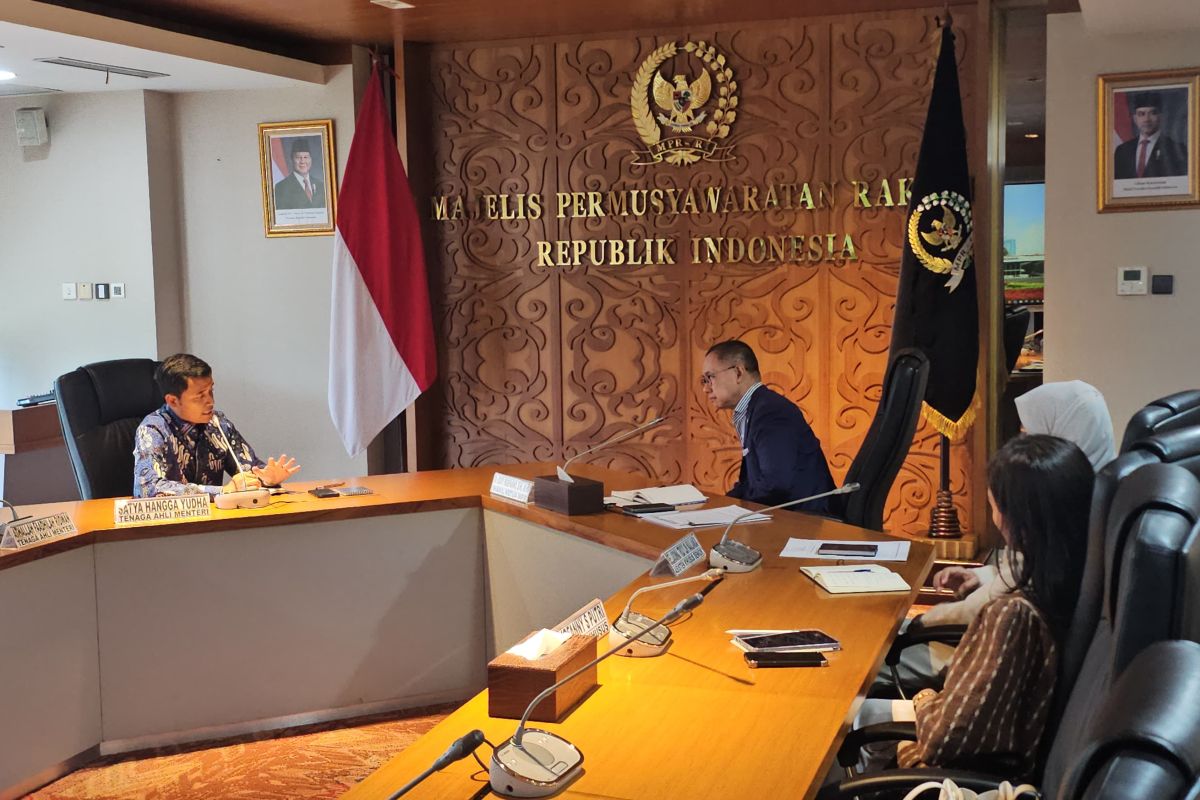
The government has assured that national energy resilience is in a safe condition amid global turmoil, particularly the conflict involving Iran, Israel, and the United States in the Middle East region. Energy Expert to the Minister of Energy and Mineral Resources, Satya Hangga Yudha Widya Putra, stated in Jakarta on Wednesday that the impact of this conflict is indeed felt globally, especially by oil-importing countries. Iran’s closure of the Strait of Hormuz, which serves as a route for around 20 per cent of the world’s oil and LNG trade, has also held up approximately 150 ships and triggered uncertainty in global energy supplies. “Indonesia still relies on imports, with lifting around 600,000 barrels per day and consumption reaching 1.6 million barrels. However, national fuel oil stocks are in a safe and controlled condition,” said Hangga, as he served as a resource person in a discussion on the impact of the Iran-Israel-US war on national energy resilience on one of the national television stations in Jakarta on Wednesday. In response to comparisons with other Asian countries, Hangga explained that the 27-28 day fuel oil stock resilience figure does not mean Indonesia only has static reserves. “Production and imports continue to run, so supplies remain maintained, even though global prices are experiencing increases,” he clarified. The government is also strengthening energy resilience through the construction of oil storage facilities in Sumatra as part of the downstreaming programme and national energy resilience in accordance with Presidential Decree No. 1 of 2025. In facing potential energy crises, according to Hangga, the government has prepared several strategic steps. In the short term, he continued, policies such as work from home (WFH) one day per week are estimated to save fuel oil consumption by up to 20 per cent. In addition, other policies such as work from anywhere (WFA), encouragement of public transportation use, electric vehicles, and energy efficiency in society are part of efforts to control consumption. For the medium and long term, Hangga added, the government is also accelerating the energy transition towards new and renewable energy (EBT), including optimisation of geothermal, solar, wind power, as well as the biodiesel programme such as B40 which will be increased to B50. The PLTD to PLTS conversion programme in 3T regions, as well as the study of electric stoves and the development of dimethyl ether (DME) as a substitute for LPG, are also ongoing to reduce dependence on imported energy. “This energy transition is not something new, but has been part of the national commitment since the Paris Agreement, Law No. 16 of 2016, the net zero emission target in 2060, and also the KEN Government Regulation No. 40 of 2025,” Hangga explained. Hangga also urged the public not to make excessive purchases of fuel oil and LPG or engage in panic buying. “Fuel oil and LPG stocks are safe, prices remain stable, and the government continues to monitor field conditions every day. We have also prepared various mitigation measures and continue to coordinate across ministries as well as with partner countries to ensure energy supplies remain maintained,” Hangga stated.