
Government Assures Komodo Loan to Japan Based on Strict Conservation Measures
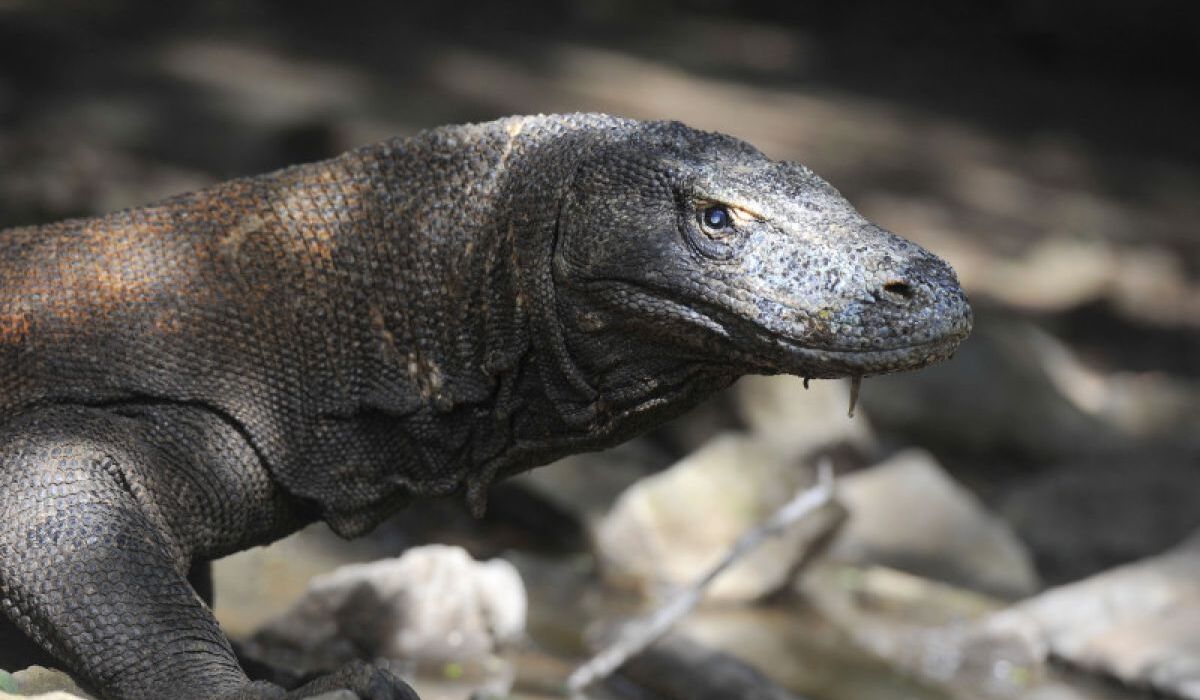
The government has emphasised that the plan to loan protected wild Komodo dragons to Japan will be carried out with great care, in a measured manner, and prioritising long-term conservation interests.
Head of Public Relations and International Cooperation Bureau at the Ministry of Forestry (Kemenhut), Ristianto Pribadi, stated that the scheme used in this cooperation is a breeding loan or loan for breeding purposes. This mechanism is strictly regulated under Ministerial Regulation of Forestry Number P.83/Menhut-II/2014.
“The plan to loan protected wild Komodo dragons to Japan will be implemented with great care, in a measured manner, and prioritising the principle of prudence as well as long-term conservation interests,” he said when contacted on Thursday (2/4).
In its implementation, this cooperation will involve domestic conservation institutions, namely Surabaya Zoo, along with partners in Japan. The entire process must meet various administrative, technical, and scientific requirements, from preparing proposals, cooperation agreements (MoU), official support from the partner government, to animal health certification.
In addition, the transportation and export permitting of Komodos will follow the provisions of the Convention on International Trade in Endangered Species of Wild Fauna and Flora (CITES) as well as international standards related to animal welfare.
Ristianto emphasised that the Komodo is Indonesia’s national animal as well as a species protected internationally. Therefore, the implementation of this cooperation can only be carried out after obtaining approval from the Minister of Forestry and the President of the Republic of Indonesia.
He also affirmed that under the breeding loan scheme, ownership of the Komodos remains with the Indonesian Government. “All Komodo individuals along with their offspring will be returned to Indonesia after the agreement period ends, which is within a five-year timeframe, unless there is another agreement that still refers to applicable legal provisions,” he said.
Ristianto mentioned that similar cooperation is not the first time Indonesia has done it. In 2010, a Komodo breeding programme was once run between Ragunan Wildlife Park and a zoo in Hungary.
In addition, since the 1970s, Indonesia has also given Komodos to several friendly countries as a symbol of diplomacy.
“Such experiences serve as an important foundation in ensuring that every international cooperation is carried out professionally and responsibly,” he said.
From a conservation perspective, the government ensures that the Komodo population in its natural habitat remains the primary priority for protection. Based on monitoring results, the number of Komodos in Komodo National Park and the Flores Island region has been relatively stable in recent years.
The population in Komodo National Park is estimated to range between 2,800 and 3,300 individuals, while on Flores Island around 700 individuals.
In addition to the wild population, there are also Komodos managed ex-situ domestically as genetic reserves as well as educational facilities.
Ristianto added that naturally, Komodos are only found in Indonesia, particularly in the East Nusa Tenggara region. However, several individuals are also in foreign conservation institutions as part of global population management programmes.
Through this breeding loan cooperation with Japan, the government hopes to strengthen conservation diplomacy, increase wildlife management capacity, and expand international networks in efforts to preserve the Komodo.
“This cooperation is expected to support the preservation of the Komodo as a world biological heritage that is the pride of Indonesia,” he concluded.