
Government advised to create roadmap for providing vehicles to village cooperatives
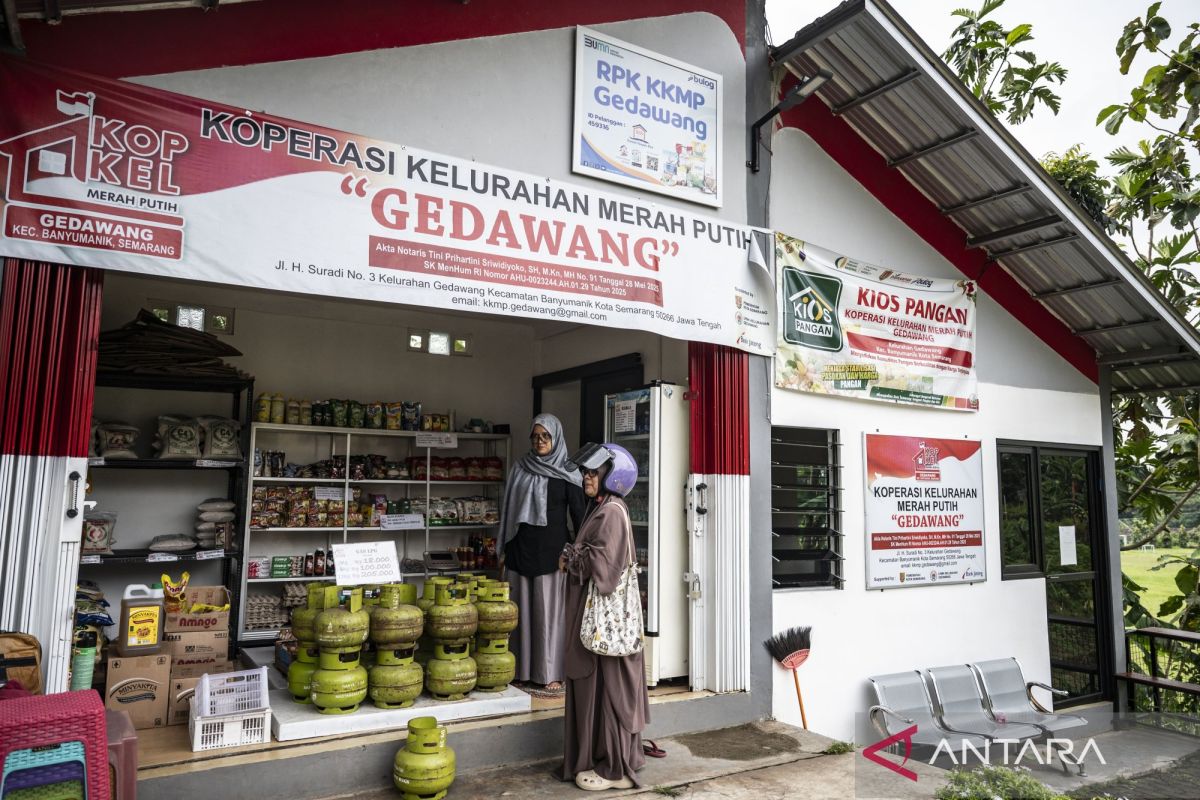
Jakarta (ANTARA) - Automotive industry expert from Institut Teknologi Bandung, Yannes Martinus Pasaribu, stated that the government needs to create a measured, data-based roadmap to meet the operational vehicle needs of Kopdes/Kelurahan Merah Putih cooperatives while empowering the national automotive industry.
He expressed this view when responding to a statement by Minister of Cooperatives Ferry Juliantono regarding support from the national automotive industry for providing operational vehicles to around 80,000 Kopdes/Kelurahan Merah Putih cooperatives throughout Indonesia.
“If the aim is to realise the commitment to empower the national automotive industry for the future needs of Kopdes Merah Putih without undermining or conflicting with the details of President Prabowo’s Asta Cita programme itself, then the first step that must be taken is to compile a clear, measured roadmap for fleet needs based on BPS geospatial zoning (Badan Pusat Statistik) or the 2024 IDM (Indeks Desa Membangun),” he said when contacted from Jakarta on Wednesday.
With a measured, data-based roadmap, he said, the provision of operational vehicles for village/urban village cooperatives can be tailored to regional conditions.
He gave an example that locally assembled 4x2 vehicles could be prepared to support cooperative operations in villages in Java and Sumatra with more accessible terrain, while 4x4 vehicles could be prepared for areas with extreme terrain.
In addition, Yannes suggested allocating supplies in the plan to provide two vehicles per cooperative to support the operations of around 80,000 Kopdes/Kelurahan Merah Putih cooperatives.
That state-owned company imported 35,000 Mahindra Ltd 4x4 pickup vehicles as well as 70,000 vehicles made by Tata Motors, consisting of 35,000 4x4 pickup vehicles and 35,000 six-wheeled trucks. The total value of the imported vehicles reached Rp24.66 trillion.
According to Yannes, the provision of the remaining approximately 55,000 vehicle units for Kopdes/Kelurahan Merah Putih should be handed over to the domestic industry.
This step is considered realistic given that there is still 20 to 30 per cent of the national vehicle production capacity that has not been optimally utilised.
“Consistency and coordination between ministries should from the start involve Kemenperin, Kemenkeu, Kemenaker, and industry players like Gaikindo to map domestic production capacity that still has idle capacity of around 20-30 per cent, so that large needs like for the Kopdes Merah Putih Programme can be absorbed by the domestic industry,” said Yannes.
Yannes encouraged the government to collaborate with industry associations like the Gabungan Industri Kendaraan Bermotor Indonesia (Gaikindo) and domestic brand holding agents to provide utility-focused commercial vehicles.
In terms of regulation, he emphasised the importance of strengthening policies on domestic content levels (TKDN) and reviewing tax policies, particularly for 4x4 vehicles that are currently categorised as luxury goods.
“We must remember that the high price of vehicles in Indonesia is because more than 40 per cent of the final price of commercial vehicles includes 11 per cent VAT, up to 20 per cent luxury tax for diesel vehicles, 22 per cent income tax on imported components, as well as SRUT costs, vehicle registration, number plates, vehicle ownership book, and other regional levies,” he explained.
Although the previous decision to import vehicles to provide them more quickly can be understood, Yannes stated that the Kopdes/Kelurahan Merah Putih Programme should serve as a showcase for national products and an instrument to drive domestic automotive reindustrialisation.
“If the government is serious about the third Asta Cita on industrialisation, then the right solution is not to justify imports because local prices are expensive, but to reform the domestic tax burden, provide stronger TKDN incentives, and ensure offtake certainty for the national industry so that local prices can be competitive without sacrificing quality and the sustainability of the business ecosystem in Indonesia,” said Yannes Martinus Pasaribu.