
Government Accelerates People's School Phase II, Deploying 59,541 Workers
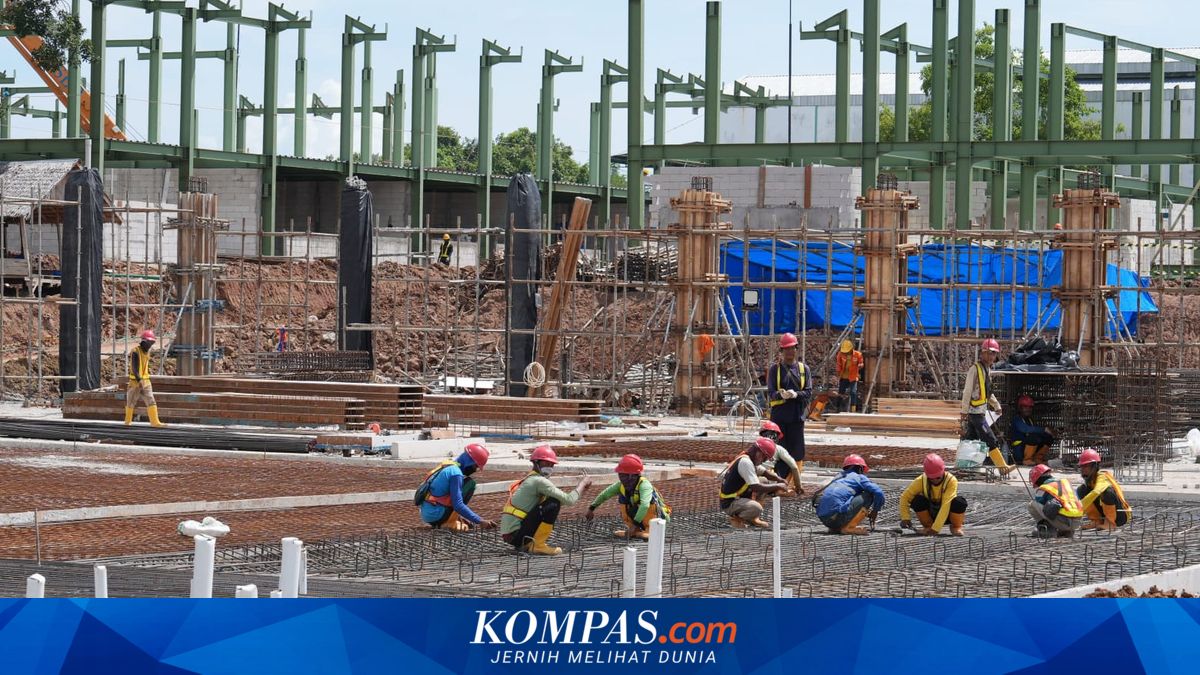
JAKARTA - The Ministry of Public Works (PU) is accelerating the construction of People’s Schools (SR) Phase II in various regions, targeting completion by 20 June 2026.
In the construction process, 59,541 workers have been absorbed and deployed across several provinces in Indonesia.
Public Works Minister Dody Hanggodo stated that the construction of SR forms part of the government’s commitment to expanding access to quality education while serving as a long-term investment in national human resource development.
“The construction of SR is a tangible manifestation of the government’s commitment to building superior human resources. The Ministry of PU aims to ensure that these educational facilities are built quickly and to high quality,” said Dody in a press release on Friday (8/5/2026).
Based on construction implementation data as of 7 May 2026, the workers involved include field workers, technical personnel, heavy equipment operators, and other support staff.
Alongside the acceleration of on-site work, progress on SR Phase II construction is steadily increasing.
As of 7 May 2026, the average physical progress stands at 45.91%, up from 40.27% on 1 May 2026.
Several construction sites have recorded significant progress, including Medan City at 64.48%, Sragen Regency at 63.22%, Bengkulu City at 62.17%, Ogan Ilir Regency at 62.07%, and Makassar City at 62.04%.
To ensure the completion target is met on schedule, the Ministry of PU has established an Acceleration Task Force involving the Directorate General of Cipta Karya, the Directorate General of Strategic Infrastructure, and various related parties.
The Ministry of PU has also urged all construction service providers and implementing state-owned enterprises to ensure that acceleration measures are optimally implemented at every construction site.
Implementation contracts have been adjusted to align with the 20 June 2026 completion target.
Various on-site acceleration strategies are being applied, starting with parallel construction of all buildings.
These include increasing the number of workers, overtime work, accelerating material mobilisation, and adding construction equipment such as cranes, piling tools, excavators, and mobile batching plants (BP).
Additionally, construction methods are being adjusted to speed up work, including the use of steel structures, metal deck, wire mesh, and hollow core slab technology for floor slabs.
The facilities being built include technology-based classrooms, skills laboratories, libraries, digital learning centres, student and teacher dormitories, healthy canteens, clinics, sports fields, extracurricular rooms, and green open spaces.
The Ministry of PU is also continuing to address various technical challenges on site, from construction access and material mobilisation to the readiness of supporting infrastructure, to ensure all projects are completed on time and can soon be utilised by the community.