
Government Accelerates Digitalisation of Social Assistance to Enhance Service Transparency
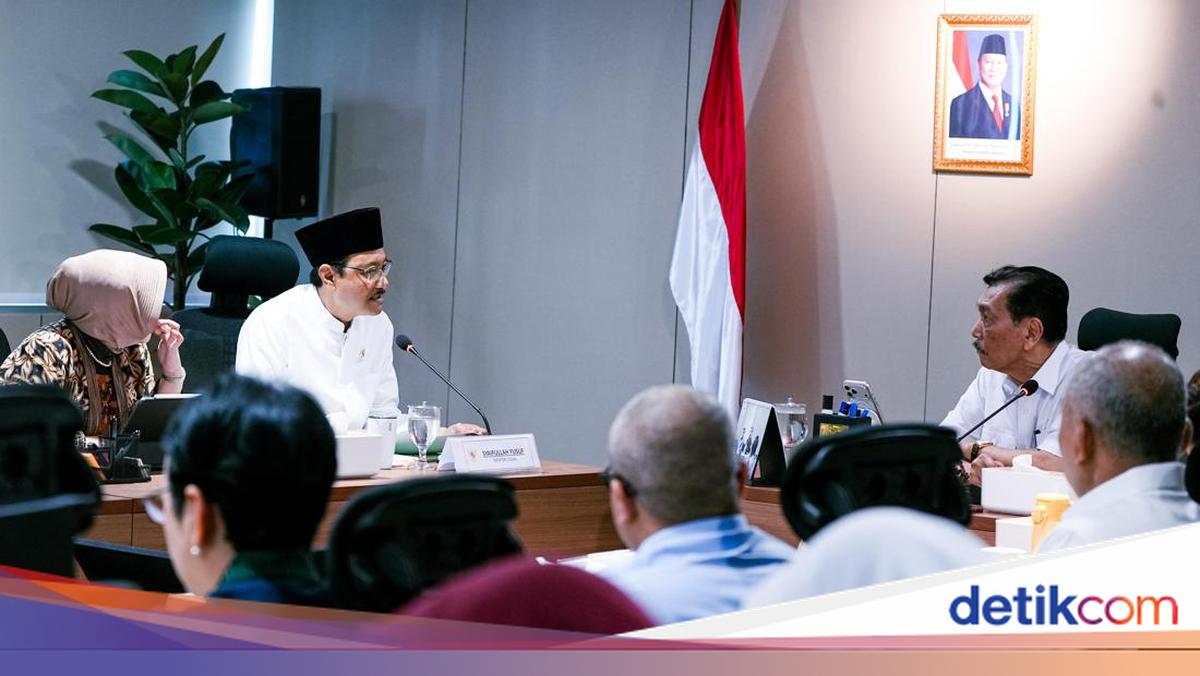
The government, through the Ministry of Social Affairs (Kemensos) in collaboration with the National Economic Council (DEN) and other ministries and agencies, is accelerating the digital transformation of social assistance (bansos) distribution to enhance targeting accuracy, efficiency, and transparency of services to the public.
In a meeting discussing the implementation report, DEN Chairman Luhut Binsar Pandjaitan emphasised that digital transformation is a crucial part of modernising public services based on cross-ministry and agency data integration within the Government Technology (GovTech) framework.
Luhut stressed that Kemensos plays a strategic role in the digitalisation of bansos.
“The ministry most involved here, in my view, is the Ministry of Social Affairs, because the biggest issues are there. But now we see improvements are starting to happen,” Luhut stated in his remarks on Wednesday (22/4/2026).
He made these comments during a meeting on the implementation report at the Soedjono Djoened Poesponegoro Building (BPPT I) on Wednesday (22/4).
He added that the government aims to expand trials to hundreds of districts before national implementation. “We target a national rollout from the end of this year to the beginning of next year, after expanding the trials and maturing the system,” he asserted.
Meanwhile, Social Affairs Minister Saifullah Yusuf, or Gus Ipul, stated that Kemensos has a strategic role in accelerating bansos digitalisation and is part of the Government Digital Transformation Acceleration Committee.
This committee coordinates system and data integration across ministries and agencies to support more efficient and transparent public services, including bansos distribution.
“The President’s policy on data consolidation and bansos digitalisation is very much in line with field needs,” he said.
Furthermore, Gus Ipul revealed that trial results in Banyuwangi Regency, East Java, showed significant impacts from bansos digitalisation.
“When using old data, the error rate could reach 77%. With DTSEN, it dropped to around 28%. After bansos digitalisation, it can be reduced to below 10%,” he explained.
These findings confirm that data integration through DTSEN and system digitalisation can significantly reduce inclusion and exclusion errors.
For additional information, there are currently 10 million PKH (Family Hope Program) recipient families, 18.25 million sembako assistance recipient families, and around 2.8 million people in decile 1 who still have not received bansos (exclusion error).
Kemensos is gradually reorganising bansos recipients by shifting from less appropriate groups to those more in need.
“We are shifting from those who are not appropriate to those more entitled, especially in the lowest decile,” said Gus Ipul.
In addition to improving accuracy, digitalisation also addresses field-level challenges in bansos distribution, including lengthy administrative processes for new recipients.
“Going forward, the determination and distribution of bansos will be faster, more transparent, and accountable,” Gus Ipul emphasised.
On the other hand, a representative from the Ministry of PANRB, Tubagus, stated that the bansos digitalisation trial will be expanded to 42 districts/cities with a simpler and more integrated system.
“The future process will be simpler, from registration, selection, to objections all in one flow,” he said.
He also added that interim results show an increase in the number of people meeting the criteria. “The results indicate more eligible people, so policy and quota adjustments are needed for optimal implementation,” he explained.
The digital transformation of bansos is a strategic step in strengthening an adaptive, accurate, and equitable social protection system.
The government targets that bansos digitalisation results can be used as the basis for distribution starting in the fourth quarter of 2026 or at the latest the first quarter of 2027, as part of efforts to build increasingly modern, integrated, and trusted public services.