
Governance and Compliance Culture Now Drives Business Competitiveness
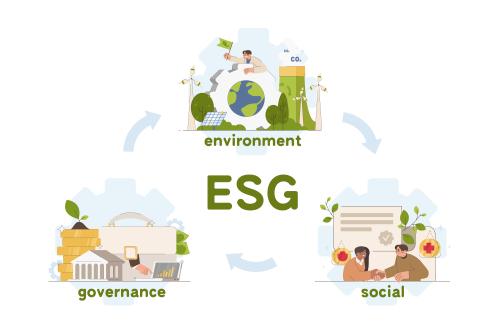
REPUBLIKA.CO.ID, JAKARTA — Companies face increasingly complex compliance challenges amid the acceleration of digital transformation, developments in Artificial Intelligence (AI), and growing demands for transparency in governance and business sustainability. These conditions are pushing the legal and compliance functions to take on increasingly strategic roles in safeguarding the company’s competitiveness while ensuring the business remains adaptable to changes in global regulatory changes. This was highlighted at the Indonesia Regulatory Compliance Awards (IRCA) 2026, on Friday 22 May 2026, which was again held as a forum for reinforcing compliance culture and corporate governance in Indonesia. Hukumonline Chief Executive Officer Arkka Dhiratara said that compliance is no longer viewed simply as an administrative obligation, but has become a fundamental pillar of business sustainability. ‘Nowadays, legal and compliance are no longer behind the scenes. Their role is not only to ensure the company complies with regulations, but also to help the company move faster, be more adaptable, and more confident in the face of change,’ said Arkka. According to Arkka, global geopolitical uncertainty, supply chain fragmentation, a global economic slowdown, the accelerating digital transformation and AI, and the demands of Environmental, Social, and Governance (ESG) are making regulatory challenges for the business world increasingly complex. Against this backdrop, awareness among companies of the importance of a compliance culture is seen to be rising. This is reflected in the participation of over 130 companies from various industries in IRCA 2026. ‘The high level of participation shows that the culture of compliance in Indonesia has increasingly become part of corporate strategy,’ said Arkka. In addition to the awards, IRCA 2026 also featured the Regulatory Compliance Summit and Regulatory Compliance Breakout Sessions, addressing developments in regulation, corporate governance, risk management, ESG, data protection, and cross-jurisdictional compliance challenges. A representative of IRCA 2026’s judging panel, Natalia Soebagjo, said that increasingly more companies view compliance as an integral part of business sustainability. ‘As judges, we do not merely look at documents or procedures, but at how the compliance culture is truly translated into everyday practice,’ Natalia said. Hukumonline Chief Media and Engagement Officer Amrie Hakim said that participation in IRCA 2026 rose by 23 percent compared with the previous year. This year, 131 companies from 23 industry sectors were recorded as participants. According to Amrie, the growth is evident not only in the number of participants but also in the quality of compliance implementation within companies. ‘More and more Indonesian companies are demonstrating a strong commitment to strengthening corporate governance, raising compliance standards, and building a sustainable culture of integrity,’ Amrie said. This year’s proceedings used a scoring methodology based on the PROSPER classification framework, which takes into account industry regulatory intensity, business risk, business complexity, and the scale of a company’s operations. Amrie emphasised that IRCA is expected to be a shared learning space designed to push compliance practices that are more adaptable and sustainable in Indonesia. ‘Ultimately, building a culture of compliance is not the job of a single party, but the responsibility of the entire business and governance ecosystem in Indonesia,’ Amrie said.