
Google Issues Dire Warning to Banks and Government, Here's What It Says
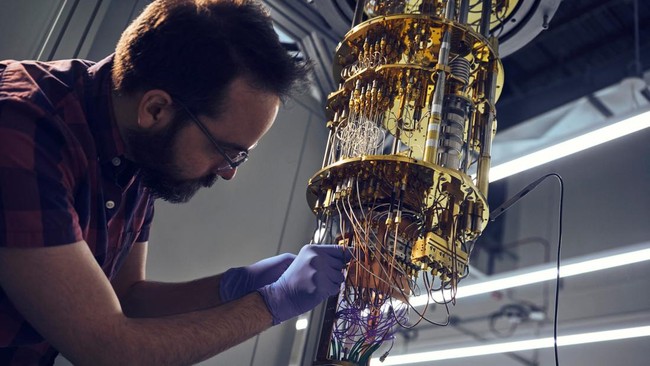
Google has warned banks, governments, and technology providers to urgently enhance their digital security systems. This warning comes amid potential threats from quantum computers, which are expected to be capable of breaking current encryption in the coming years.
In its official statement, Google described quantum computing technology as posing a “significant threat to current cryptographic standards” before the end of this decade. The company has also set an ambitious target to drive the migration to post-quantum cryptography (PQC) by 2029 at the latest.
“The encryption currently used to keep information secret could easily be broken by large-scale quantum computers in the coming years,” Google wrote in its official blog, quoted on Saturday (28/3/2026).
The Alphabet parent company emphasised that the transition to new encryption systems must be undertaken immediately, particularly for authentication services and digital signatures that form the backbone of online security.
Google has even adjusted its threat model to prioritise PQC migration and recommends that other industry players follow suit.
“We recommend that other engineering teams follow this step,” the company wrote.
In addition to Google, several tech giants such as Microsoft, along with various universities in the UK and the United States (US), are racing to develop quantum computers. This technology leverages quantum mechanics principles to solve complex calculations that conventional computers cannot handle.
However, quantum computer development still faces numerous technical challenges. Current systems are considered too small and not yet powerful enough to widely crack modern encryption. Computers with hundreds of thousands to millions of stable qubits are needed to achieve such capabilities.
Leonie Mueck, former head of product at quantum startup Riverlane, said Google’s warning does not necessarily mean the threat will materialise exactly in 2029. However, she stressed that the risk is close enough to warrant anticipation now.
“Essentially, we’ve seen in the intelligence community that they’ve been thinking about this threat for over a decade,” Mueck said.
She added that many parties are now anticipating the “store now, decrypt later” scenario, where data encrypted today could be cracked in the future once quantum computers have matured.
Mueck emphasised the importance of long-term data protection. “Documents from 10 years ago are still relevant and must not fall into the wrong hands in the future. You need to ensure that secret data today remains secure even against future quantum computers,” she explained.
Several authorities have issued similar warnings. For instance, the UK’s National Cyber Security Centre has urged organisations to prepare for quantum hacking threats by 2035 at the latest.