
Goods Transport Contributes 10 Percent to Accident Rates, Here's the Ministry of Transportation's Response
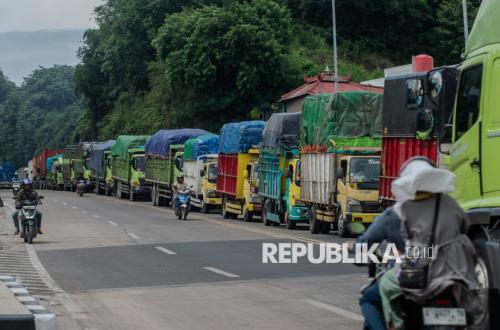
The Directorate General of Land Transportation, Ministry of Transportation, organised Technical Guidance (Bimtek) and Competency Training for Drivers of General Goods Transport Companies (safety driving) at the Surabaya Aviation Polytechnic, East Java. Director of Road Transportation Facilities and Safety, Yusuf Nugroho, stated that this activity represents the government’s commitment, in collaboration with industry players, to ensure safety in the goods transport industry, which plays a crucial role in the national economy.
“The goods transport industry is vital to the economy, but data from the National Traffic Police show that 10 percent of road accidents involve goods transport,” said Yusuf in a written statement in Jakarta on Friday (17/4/2026).
Yusuf explained that accidents can impact the national economy because the victims are mostly of productive age, causing material damage and affecting transport service delivery. In the event attended by 38 goods transport companies, the Ministry of Transportation continues to strive to improve safety in the logistics transport industry.
Yusuf noted that human factors contribute significantly to accident causes. Therefore, efforts are needed to enhance the competency of goods transport drivers, particularly in defensive driving skills during emergencies.
“In addition to driver capabilities, a comprehensive and coordinated safety governance must be implemented through the Public Transport Company Safety Management System or SMK-PAU. Thus, besides drivers, education on the importance of implementing SMK-PAU is also provided to company management levels,” said Yusuf.
He added that the drivers attending this bimtek received various materials, including procedures for loading and transporting goods on roads, skills and understanding of pre-trip inspections. Furthermore, the bimtek covered topics on classification and identification of transported goods, driving proficiency and skills, defensive driving, and understanding of applicable regulations and rules.
“The role and support of company management is equally important. It is hoped that all goods transport companies can consistently apply standard operational procedures adjusted to government regulations,” Yusuf continued.
Therefore, Yusuf added, through this activity, it is hoped that company management can regulate drivers’ working hours in accordance with applicable rules. Regulating working hours for drivers is considered important to prevent fatigue, thereby reducing the potential for accidents and fatalities.
In addition to theoretical materials, bimtek participants also conducted practical safety driving sessions and interview sessions for safety driving competency assessment. Yusuf hopes that with the ongoing bimtek on safety driving, goods transport services can operate more safely and efficiently.
“Through this activity, let us collaborate and synergise to realise safer, more efficient, and sustainable goods transport services,” said Yusuf.