
Goods Donation: Social Movement at Nurul Ashri Mosque Yogyakarta
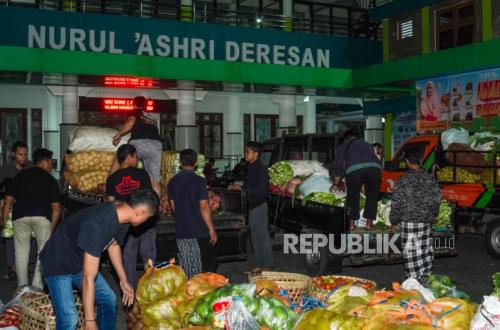
Yogyakarta — Mosques are not always synonymous with places of worship alone. In Deresan, Sleman, Yogyakarta, Nurul Ashri Mosque demonstrates how a mosque can become a centre of social movement with far-reaching impact on the broader community. Through various humanitarian and empowerment programmes, the mosque brings Islamic values to life through tangible actions that touch multiple layers of society.
Ustaz Bangkit Dwi Purwanto from the Nurul Ashri Foundation explained that the social movement they have built stems from simple needs within the mosque’s surrounding environment. Located in an area heavily populated by migrant students, mosque officials observed many second-hand but usable items being left behind after students completed their studies. From this observation, the idea of launching a goods donation drive emerged.
“Many students are confused when they finish university about what to do with items in their boarding houses. There are mattresses, wardrobes, clothing. It’s inconvenient to take them home, and selling them one by one does not work out for everyone,” Bangkit explained at a seminar titled “Growing Better, Finding Your Calling: How to Survive in This Era” organised by Semesta Network in Yogyakarta on Friday, 10 March 2026.
Through the goods donation programme, mosque officials collect these items and resell them at affordable prices. The proceeds support the mosque’s social programme operations. Initially, items were stored in a small outlet near the mosque. However, as donations increased, they eventually rented a warehouse and later secured larger storage facilities.
Beyond goods donation, Nurul Ashri operates various programme divisions working in social and educational sectors. The Baitul Mal programme, for instance, actively distributes humanitarian assistance ranging from free meal programmes, low-cost bazaars, to disaster relief efforts across different regions. The education division, meanwhile, develops diverse knowledge classes open to the community. One of the most popular programmes is pre-marital education, which covers not just religious aspects but also brings in experts from various fields such as family economics, psychology, and reproductive health.
“When discussing reproductive health in marriage, we invite a doctor. When discussing family economics, we invite an economics expert. Learning at the mosque does not always have to be with an Islamic scholar,” Bangkit said.
Nurul Ashri’s social movement also touches the economic sector, particularly farming. When harvest prices plummeted, the mosque initiated a direct purchase programme from farmers, which was then distributed to congregation members. One example occurred when cassava prices in Gunungkidul fell to approximately 500 rupiah per kilogram. Through a collective purchasing system, Nurul Ashri managed to accumulate purchases of dozens of tonnes of cassava from farmers, which were distributed to communities and Islamic boarding schools, even sent to outside the region.
Similar programmes have been implemented for various other commodities such as vegetables and fruits. These efforts even received recognition from Bank Indonesia for helping stabilise market prices.
The mosque’s social movement also transcends geographical and religious boundaries. Nurul Ashri volunteers have sent aid to disaster-affected areas in East Flores, East Nusa Tenggara, where the majority of residents are non-Muslim.
“The area is predominantly Catholic with almost no mosques. But when we are talking about humanity, there are no more barriers. We help anyone in need,” Bangkit said.
Additionally, their humanitarian programmes reach remote areas across Indonesia and even abroad, such as Uganda, in programmes distributing qurbani animals.
Over the past six to seven years, the social movement that began within the mosque environment has continued to grow. By 2025, approximately 600,000 people have been involved as donors in various programmes implemented, whilst over 13,000 people have received direct benefits.
For Bangkit, all these programmes stem from one simple idea: making the mosque a shared space for everyone.
“Our tagline is ‘Mosque for All’. This means the mosque does not favour any particular group, and as long as there are people in need of assistance, we will try to be present to the best of our ability,” he said.
From managing second-hand goods to farmer empowerment, from family education to cross-regional humanitarian assistance, Nurul Ashri demonstrates that a mosque can be a centre of living social movement—a place where the values of worship meet tangible action for humanity.