
Good News! Ojol Drivers Could Buy Homes on Installments Under This Scheme
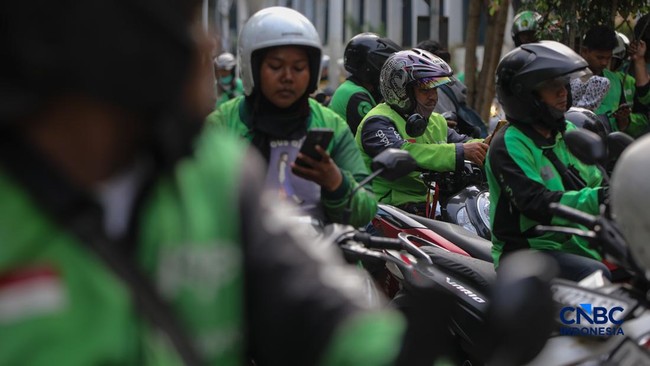
Jakarta, CNBC Indonesia – The government together with banks and property industry players is finalising a new housing-financing scheme for informal workers such as online motorcycle taxi drivers, traders, freelancers and micro, small and medium enterprises (UMKM). The scheme is being prepared to address the problems of millions of people who have long found it difficult to access KPR due to administrative banking requirements.
Endang Kawidjaja, a Senior Official to the Minister for Housing and Settlement Areas (PKP), said discussions about a rent-to-own scheme emerged after efforts to push for relaxation of small-credit to OJK had not found a clear breakthrough.
‘Why rent to own? Because actually these informal workers as well as formal ones who have BI-checking issues do not necessarily lack the ability to pay installments. But they have not done anything and their SLIK is already a hurdle,’ Endang said at the Media Discussion on Housing Financing Innovations for Informal Workers in Kemang, South Jakarta, Friday (22 May 2026).
The government then started looking for a new proof model so prospective homebuyers could still access financing. The concept being built is no longer just about formal documents; it’s about the ability to pay demonstrated directly over a period of time.
‘If they are already able to pay installments and their track record is good, why can’t that be disregarded? From there the informal sector can enter. This is the main principle,’ he said.
The scheme is now being discussed with banks, including Bank Syariah Nasional (BSN) which is preparing a financing product specifically for non-fixed-income workers. Mortgage Financing Division Head at BSN, Putri Alfarista Lufianingrum, said that informal workers actually have income, but it is difficult for banks to read in the administrative system because it is not formally recorded.
‘Consumers actually have income, but it is not recorded. That is what sometimes makes banks hard to analyse,’ Putri said.
BSN is also preparing several Islamic financing models that are more flexible. One of them is through Musyarakah Mutanaqisah or MMQ that allows instalment adjustments in line with the customer’s income pattern.
‘For example, in the first two years they can afford Rp1 million, then next it rises to Rp1.5 million. But everything is transparent from the outset,’ she said.
On the other hand, property analyst Marine Novita said the current KPR system in Indonesia is still too oriented toward formal workers. Yet about 60% of the national workforce comes from the informal sector.
‘The main problem for informal workers is not an inability to pay for a home, but that they cannot prove that ability within the traditional banking system,’ Marine said.
She cited many digital workers such as online drivers or e-commerce sellers who actually have fairly stable daily cash flows. However, that data has not been fully used as an alternative credit scoring.
‘If it’s Gojek, income is daily. So do not only look at bank statements; look at the digital footprints as well,’ she said.