
Good News for Eid 2026: Sufficient Food Stocks and Stable Prices
JAKARTA, KOMPAS.com – Abundant food availability and relatively stable prices ahead of Eid al-Fitr 1447 Hijriah are bolstering market stability. This situation not only preserves public purchasing power but also provides assurance for farmers and distributors.
Based on monitoring in traditional and modern markets, various staple needs are well-stocked with prices showing no significant spikes.
“We want everyone to smile. Farmers smile because their harvest prices are good, traders smile because goods are available and can be sold, and the public smiles because food prices are affordable,” said Agriculture Minister Andi Amran Sulaiman in a written statement, quoted on Monday (23/3/2026).
“That is the government’s goal in safeguarding food,” he continued.
According to Amran, this stability results from increased production, strengthened food reserves, distribution monitoring, and integrated price controls in the market.
On the other hand, the potential harvest in the near term reaches around 12 million tons. In total, the national rice stock strength is estimated at about 28 million tons, equivalent to food security for around 11 months ahead.
Rice production is also showing an upward trend with the main harvest season occurring in various regions from February to April 2026.
“Our production is increasing, the main harvest is happening in many areas—February, March, and April with harvests in various regions—so the national rice stock is very strong,” said Amran.
“Our production is already above the national consumption needs,” he added.
With rice needs around 2.59 million tons per month and monthly production ranging from 2.6 to 5.7 million tons, this positions Indonesia in a surplus state.
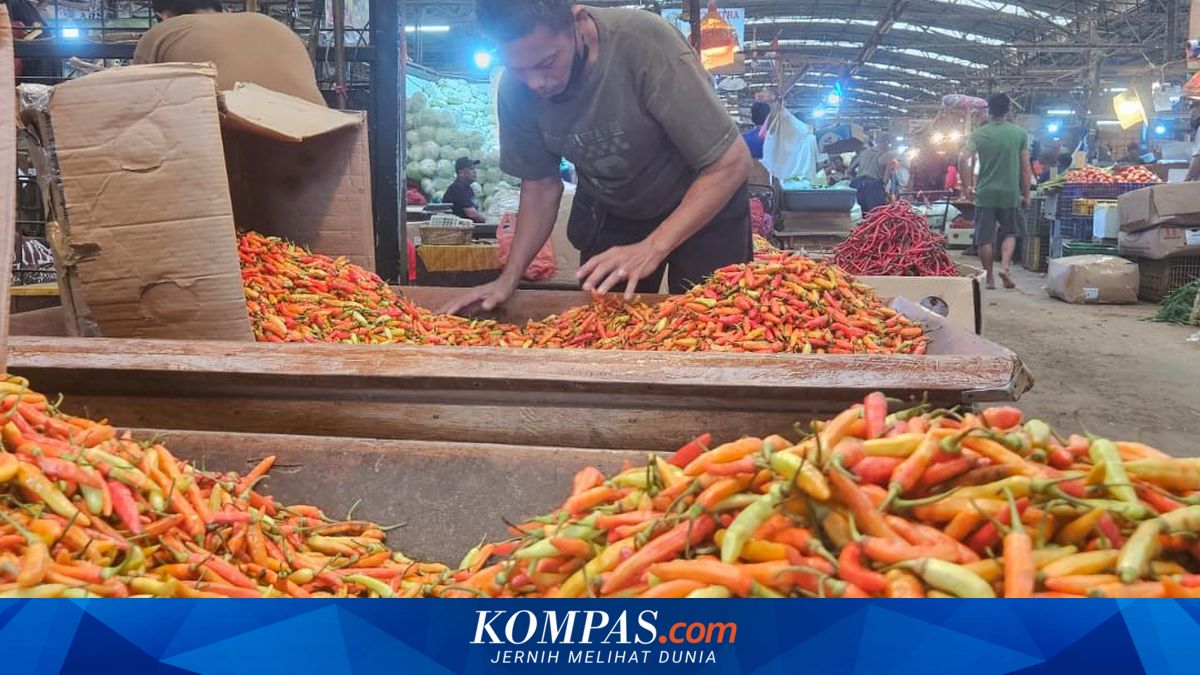
For cayenne peppers, availability reaches 409,000 tons against needs of 304,000 tons, or a surplus of 105,000 tons. Chicken meat also records a surplus of 727,000 tons from availability of 2.07 million tons and needs of 1.34 million tons.
Meanwhile, shallots record a surplus of 57,000 tons from availability of 479,000 tons and needs of 422,000 tons.
In March, chilli production also experienced a surplus, with red cayenne peppers around 46,868 tons and large chillies around 8,282 tons. This condition keeps chilli prices stable and even starting to decline in the market.
“If production is in surplus and distribution is smooth, then prices will be stable. That’s what we continuously maintain, from upstream to downstream,” said Amran.
He emphasised that the government continues to balance prices so as not to burden the public while still benefiting farmers.
“Food prices must not be too high because it burdens the public, but also not too low because it harms farmers,” he stressed.
“The government must maintain that balance.”