
Golkar Secretary-General proposes 5 per cent parliamentary threshold combined with factional threshold
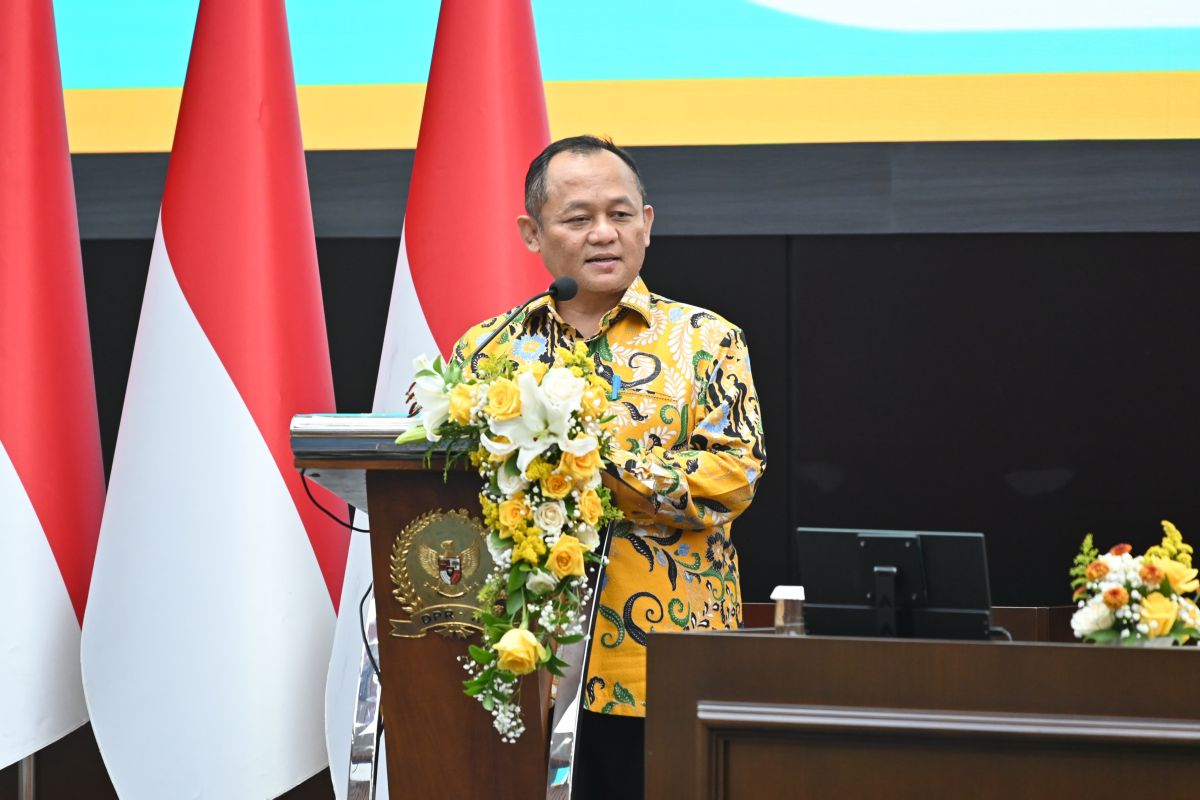
Jakarta — The Secretary-General of the Golkar Party (Partai Golongan Karya), Muhammad Sarmuji, has proposed that the parliamentary threshold be raised to 5 per cent, but combined with a factional threshold.
“I propose a 5 per cent parliamentary threshold combined with a factional threshold. The factional threshold has not been widely discussed,” Sarmuji said in a statement in Jakarta on Wednesday.
Sarmuji explained that a factional threshold is a requirement for establishing a faction in the Indonesian House of Representatives (DPR RI). He added that the ideal requirement for forming a faction would be twice the number of parliamentary bodies (Alat Kelengkapan DPR RI or AKD).
“So the parliamentary threshold does not need to be as high as other proposals, but there should be a factional threshold. Why must there be one? Because it makes decision-making in the House easier if there are fewer factions. So, for example, if there are 8 parties entering parliament later, there would still be requirements for forming a faction,” he said.
The parliamentary bodies comprise the leadership, 13 commissions (2024-2029), the Consultative Body (Bamus), the Legislative Body (Baleg), the Budget Body (Banggar), the Council of Honour (MKD), the State Finance Accountability Body (BAKN), the Inter-Parliamentary Cooperation Body (BKSAP), the Internal Affairs Body (BURT), Special Committees (Pansus), and the Community Aspirations Body (BAM).
“All parliamentary bodies, including councils and commissions. Commissions and other bodies number 20, which means 40 seats in total. That is the ideal figure. If the parliamentary threshold is 5 per cent and the factional threshold is twice the parliamentary bodies, in my view that is ideal and proportional,” he said.
Sarmuji further explained that his proposal for factional threshold requirements was not without reason. According to him, this measure would prevent faction members from holding multiple positions simultaneously.
“Why twice the parliamentary bodies? So that faction members do not scatter. Previously, after one meeting they move here, then move there. There was previously an experience where a small party’s members held an excessive number of parliamentary body positions,” said Sarmuji.
Sarmuji also stated that with such a parliamentary threshold, all parties would have an equal opportunity to enter parliament.
“In fact, it should not be a problem for any party. Why? Because the election has not yet taken place. All parties have the opportunity to pass or fail the parliamentary threshold. So there is no question of sympathy for small parties — who decides what is a small party anyway? Every party wants to become a large party,” he said.