
Golkar Secretary General: LPDP Scholarships Must Not Be Reserved for the Wealthy, Clear Affirmative Action Needed
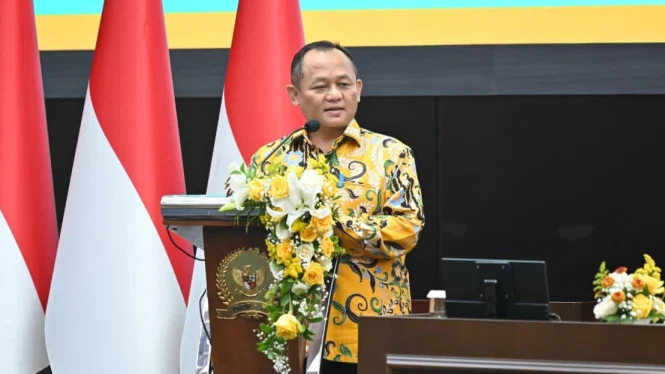
Jakarta, VIVA – Golkar Party Secretary General M. Sarmuji has responded to public scrutiny surrounding an Indonesian LPDP (Education Fund Management Institution) scholarship recipient, Dwi Sasetyaningtyas, who drew widespread criticism online after posting a video celebrating her second child’s naturalisation as a British citizen.
Dwi Sasetyaningtyas is an alumna of a master’s programme at Delft University of Technology in the Netherlands, graduating in 2017. Her husband, Arya Iwantoro, pursued master’s and doctoral studies at Utrecht University in the Netherlands between 2017 and 2022, also funded through the LPDP scholarship scheme, which draws from Indonesia’s education endowment fund and taxpayer money.
Addressing the controversy, Sarmuji stressed that the issue is not merely about an individual’s personal choices, but about policy design that must uphold social justice.
“I personally raised this concern during a working meeting with the Ministry of Finance in early 2022. I conveyed that if LPDP lacks clear emphasis and affirmative action measures, it will become a closed circle enjoyed only by the wealthy,” Sarmuji said in a statement on Sunday, 22 February 2026.
According to him, the core issue with LPDP lies in its eligibility requirements, which are in practice far easier to meet for those who are already socio-economically advantaged.
“Without affirmative action, only the wealthy will benefit, because the requirements are extremely demanding. The TOEFL English score thresholds are very high. And the people who can meet these criteria are, on average, invariably from affluent backgrounds,” he said.
The Golkar faction chairman in the House of Representatives argued that the most important aspect of a state scholarship programme should be the academic potential of recipients to cope with rigorous study at world-class universities.
“The primary consideration should be academic potential — whether the candidate can handle demanding coursework. Language skills can be upgraded. The state can step in to help with that. But if from the outset only those who have been provided with the best schools and courses since childhood can qualify, then the same privileged group will always be the ones who benefit,” he said.
He added that the ability to meet academic and foreign language standards is heavily influenced by socio-economic background. Children from affluent families have access to quality schools and adequate English language courses, whilst children from disadvantaged families face significant barriers.