
Gold Prices Surge as US Tariff Uncertainty Takes the Blame
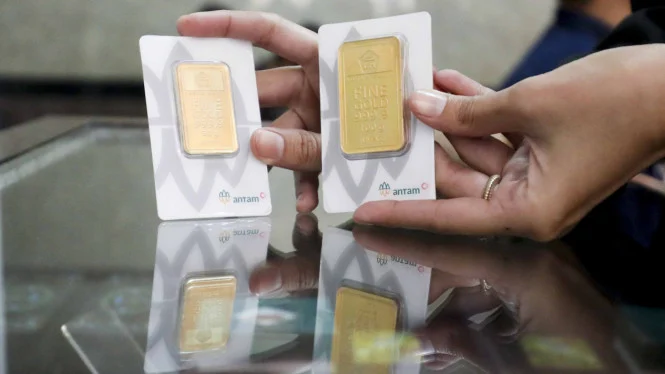
Jakarta — Gold price movements have once again captured the attention of global market participants. Amid uncertainty surrounding United States economic policy, a weakening dollar, and unresolved geopolitical dynamics, the precious metal continues to demonstrate a strengthening trend.
Investors are now scrutinising whether the gold rally will persist in the near term. A number of fundamental indicators suggest sentiment towards gold remains positive, driven by a combination of external factors such as new US tariff policies, inflation data, and geopolitical conflict developments that are serving as catalysts supporting gold prices on the international market.
According to a report from The Times of India on Tuesday, 24 February 2026, spot gold for the week ending 20 February closed approximately 1.2 per cent higher at US$5,104 per ounce. Converted at a rate of Rp16,800 per US dollar, this equates to approximately Rp85.7 million per ounce. On Friday alone, gold surged by around 2.1 per cent.
The strengthening continued on 23 February, as the US dollar weakened further due to tariff policy uncertainty. At the time of writing, gold was recorded up 1.50 per cent to US$5,182 per ounce, or approximately Rp87 million per ounce.
Market sentiment was also influenced by a ruling from the Supreme Court of the United States, which determined that President Donald Trump had exceeded his authority in imposing a number of tariffs last year. However, Trump stated he would proceed with new global tariffs of 15 per cent under separate legal provisions, set to take effect on 24 February.
The uncertainty surrounding tariff policy has heightened market concerns. The European Union has called on the US to honour previous trade agreements, given the lack of clarity over whether the new tariffs would replace existing accords.
On the macroeconomic front, US fourth-quarter Gross Domestic Product (GDP) data showed annualised growth of 1.4 per cent, well below the estimated 2.8 per cent and a significant slowdown from the 4.4 per cent recorded in the previous quarter. The deceleration was triggered by a decline in government spending resulting from a temporary shutdown.
Meanwhile, the PCE price index — the US Federal Reserve’s preferred inflation gauge — came in higher than expected. Core PCE rose 3 per cent on an annualised basis in December, above the projected 2.9 per cent.