
Gold Prices Predicted to Fluctuate Between Rp 2.69–2.88 Million; Is Now a Good Time to Buy?
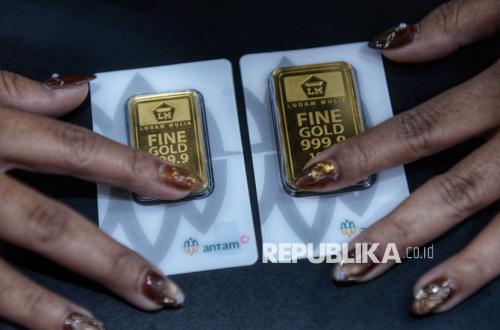
Gold prices or precious metals are predicted to move within the range of Rp 2.7 million to Rp 2.8 million per gram next week. Currency and commodity observer Ibrahim Assuaibi noted that the downward trend in gold prices could represent an opportune moment to collect or invest in this safe-haven commodity while prices are relatively low.
Ibrahim noted that global gold prices closed at $4,538 per troy ounce on Saturday morning, while local precious metal prices stood at Rp 2.77 million per gram. Technically, if a decline occurs, the first support level for global gold is at $4,444 per troy ounce, with a second support at $4,307 per troy ounce. For local precious metals, the first support level is at Rp 2.75 million per gram, and the second at Rp 2.69 million per gram. Conversely, if prices rise, the first resistance level is expected at Rp 2.79 million per gram, with a second resistance at Rp 2.88 million per gram. Ibrahim stated that reaching the Rp 2.9 million per gram level would likely be very difficult.
Furthermore, the US Dollar Index is predicted to widen in next week’s trading, with support at 97.30 and resistance at 101.10. Meanwhile, crude oil prices remain strong, with WTI crude oil predicted to have a support level at $91.60 per barrel and resistance at $110.60 per barrel. This implies that oil prices and the US Dollar Index are likely to strengthen next week, while gold prices are expected to remain volatile.
Regarding the drivers of these movements, Ibrahim highlighted geopolitical factors, specifically the discussions in China where US President Donald Trump has sought a mutual agreement to reopen the Strait of Hormuz. While Trump claims Chinese President Xi Jinping agrees that Iran must reopen the strait, uncertainty remains regarding whether Iran will enter a new agreement with the US. Ibrahim noted that if conflict between Iran and Israel escalates and the Strait of Hormuz is opened, gold prices could strengthen; however, continued US intervention or a blockade by Iran could drive prices down.
Other significant factors include the US-China trade war, which shows signs of easing following meetings between Xi Jinping and Donald Trump, with China agreeing to purchase US agricultural products, oil, and Boeing aircraft. Additionally, US Federal Reserve policy under Governor Kevin Warsh remains a key factor. High inflation in the US, driven by rising gasoline and food prices due to ongoing conflicts, has led polls to suggest a 60 per cent likelihood of the Federal Reserve raising interest rates this year. While Trump suggests that resolving Middle East conflicts could bring inflation below 2 per cent, the current fear of a strengthening US Dollar and rising oil prices may prompt global central banks to raise interest rates collectively, which could put downward pressure on gold prices.