
Gold Loses Its Crown, Its "Life" Snuffed Out: Price Crashes Brutally
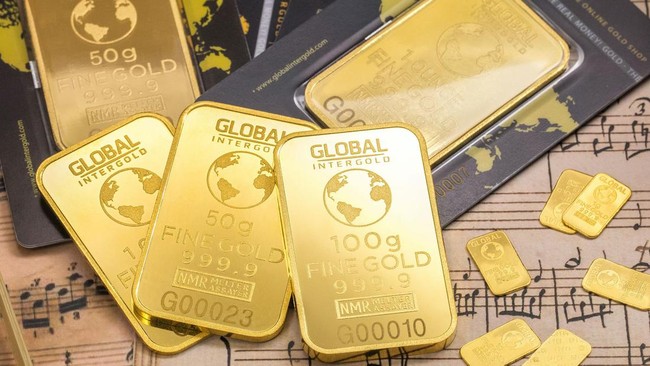
Jakarta, CNBC Indonesia - Gold prices remain battered in trading today. According to Refinitiv, gold was trading at US$4,462.49 per troy ounce at 06:59 WIB on Monday (23/3/2026), down 0.56%. This weakening extends gold’s suffering. In the last trading session last week, Friday (20/3/2026), gold closed at US$4,494.02 per troy ounce. The price plunged 3.32%. This decline also prolongs gold’s misery with a 13.43% drop over eight consecutive days. Last week, gold fell 10.58%. This drop is the largest since the week ending 4 March 1983, or 43 years ago. Gold’s sharp decline currently reflects a shift from geopolitically driven market sentiment to macro-factor driven sentiment. A strengthening dollar and expectations of higher interest rates now dominate sentiment. This change in macro expectations has overshadowed its traditional role as a safe haven asset. The dollar index closed at 99.56 and was at 99.64 last Friday. This decline has occurred so rapidly that it has shocked many investors. Geopolitics No Longer Supports Prices, Gold Loses Its Eternal Status as a Safe Haven Since the end of February, when tensions escalated due to US-Israel attacks on Iran, gold prices have fallen more than 15%. This is a significant reversal from previous patterns, where geopolitical uncertainty usually drove gold demand. Instead of being a safe haven, gold is now reacting negatively to the macro environment formed by these geopolitical developments. Gold is behaving like a risky asset, falling alongside stocks when volatility increases. One of the main factors behind this decline is the strengthening of the US dollar. Rising oil prices have increased global demand for the dollar, as energy is traded in USD. This has pushed the dollar higher and pressured gold prices. At the same time, Jerome Powell signalled a more hawkish stance from the Federal Reserve, warning that inflation could rise again. As a result, market expectations for a rate cut in May have plummeted sharply from 60% to just 16%. Higher interest rates reduce the appeal of non-yielding assets like gold, accelerating selling pressure. Despite the sharp decline, gold’s long-term fundamentals are still supported by strong demand from central banks. The People’s Bank of China (PBOC) has extended its gold buying trend for 16 consecutive months as part of reserve diversification efforts. China’s gold reserves now stand at 74.22 million troy ounces, worth nearly US$387 billion. This ongoing accumulation provides a “structural floor” for gold prices, even amid high volatility. This weakening trend is likely to intensify at the start of this week following geopolitical developments over the weekend. US President Donald Trump threatened to “destroy” Iran’s power plants within 48 hours if the Strait of Hormuz is not fully opened. Iran responded by warning it would close the strait and target US-related energy and infrastructure in the Gulf region if the threat is realised, increasing the risk of a much larger supply shock. Amplification risks arise from potential further escalation if the threat is carried out. It is highly likely that Iran would retaliate by attacking major energy and social infrastructure in the Gulf region, potentially causing widespread and prolonged production disruptions. This is even more critical than the Strait of Hormuz itself, because if supplies are disrupted directly, shipping routes become a secondary factor. Markets have already felt sensitivity to this type of shock, as seen from the damage to a major gas facility in Qatar last week, which triggered sharp adjustments in global short-term interest rates, raising inflation expectations and pushing yields higher on the long-term curve. Similar or larger disruptions to supply risk strengthening the yield-based pressure that has previously weighed on gold and silver prices.