
Gold Enters Dangerous Week as US$5,000 Level No Longer Safe
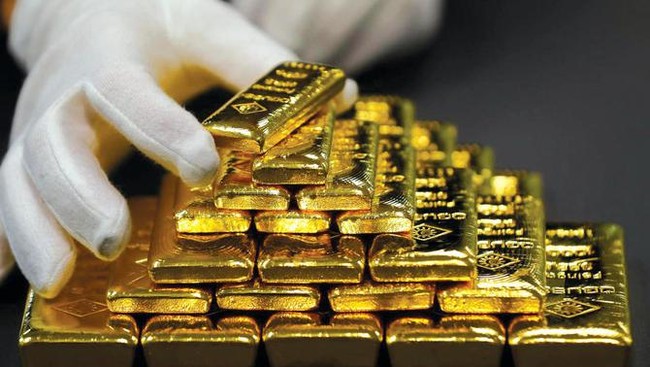
Jakarta — Gold prices collapsed sharply at the start of the week amid intense pressure from a strengthening US dollar.
According to Refinitiv, gold was trading at US$4,988.69 on Monday, 16 March 2026 at 06:32 WIB, down 0.6%. This decline compounds losses from the previous Friday, when gold fell 1.2% to US$5,018.43.
Typically, escalating tensions in the Middle East would bolster gold’s appeal as a safe-haven asset. However, this time the dynamic differs. With the situation in Iran and the Strait of Hormuz approaching closure, crude oil has instead surged toward US$120 per barrel, triggering fears of a new wave of global inflation.
Rather than rotating into gold, many investors are choosing US dollars and US Treasury yields instead. They anticipate the Federal Reserve will maintain elevated interest rates to combat inflation driven by rising energy costs.
This shift makes gold less competitive. As 10-year Treasury yields rise, many fund managers find holding gold increasingly unattractive. Currently, investors seeking safe assets are divided between the US dollar and gold, with the dollar gaining the upper hand for now.
Over the coming week, the relationship between Brent oil prices and the US dollar will likely become the primary factor influencing gold’s movement.
A Testing Week Ahead: The US$5,000 Psychological Level
Gold is expected to face substantial headwinds this week. Investors are watching for the outcome of the Federal Open Market Committee (FOMC) meeting on Wednesday.
The FedWatch projection indicates market participants are betting 99% on interest rate holds. Markets now expect the Federal Reserve will cut rates only once.
This dynamic is propelling the US dollar higher. The dollar closed Friday at 100.36, its highest level since May 2025.
Global gold purchases are denominated in US dollars, so dollar strength dampens gold demand.
Given these movements, gold’s correction may well continue. The metal recently broke below a tightening symmetrical triangle pattern, which typically signals further selling pressure.
Gold is currently struggling to recover above US$5,047, which previously acted as support but has now become resistance.
If selling pressure pushes gold below US$5,000 by day’s end, prices could weaken considerably. The next support level lies around US$4,960, and in a worst-case scenario, gold could test the 50-day moving average near US$4,842.
Conversely, for buyers to regain control, gold must break above US$5,130, which would suggest the current decline is merely a temporary correction.
Despite recent fluctuations, gold’s long-term prospects remain strong. Many central banks, particularly in developing nations, are increasingly reducing their reliance on US dollar reserves.
Experts project central bank demand for gold will remain stable at approximately 60 tonnes per month through 2026. This consistent government purchasing helps cushion gold price declines, even if the Federal Reserve raises rates.
Major financial institutions such as Goldman Sachs and experienced analysts like Ed Yardeni remain optimistic. They predict gold could reach US$5,400 to US$6,000 by year-end.
According to them, the trend of shifting toward assets unlinked to traditional currencies will persist for years, meaning near-term dollar strength will not alter this trajectory.
For investors watching the market, this week’s price fluctuations represent merely one chapter in gold’s potential ascent throughout 2026.