
Gold Apocalypse Begins! Prices Plunge to Worst Record in 43 Years
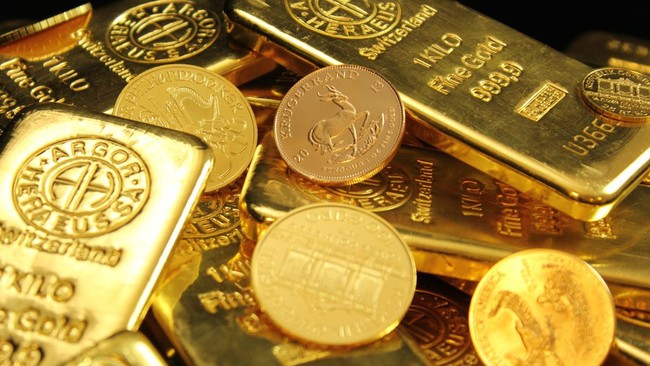
Jakarta, CNBC Indonesia - Gold prices took a beating at the end of this week. On a weekly basis, gold prices even fell to the worst record since March 1983, or the last 43 years.
According to Refinitiv, gold prices in the last trade of the week closed at US$4,494.02 per troy ounce. The price tumbled 3.32%.
This weakening also prolongs gold’s suffering with a 13.43% plunge over eight consecutive days.
Yesterday’s closing price was the lowest since 7 January 2026 (US$4,475 per troy ounce), or more than three months ago.
The decline in gold over these eight days also marks the first since late September and early October 2023, or more than 2.5 years, where gold plunged for eight days. However, with a decline of only 5.45%.
Gold’s worst record was also recorded for the weekly movement.
In the past week, gold prices plummeted 10.58%. This decline is the largest since the week ending 4 March 1983, or 43 years ago.
Gold prices were battered after reports indicated that the United States (US) would deploy additional troops to the Middle East. This triggered concerns over rising oil prices, inflation, and ultimately higher interest rates.
The dollar index strengthened to 99.65 in yesterday’s trading, from 99.23 in Thursday’s trading. Meanwhile, the yield on the 10-year US Treasury surged to 4.39%, the highest since July 2025.
Gold purchases are converted in US dollars, so a rising dollar makes the conversion price more expensive and pressures demand.
Gold also offers no yield, making it unattractive when bond yields strengthen.
A Reuters report citing three US officials stated that the US military is sending thousands of additional marines and sailors to the Middle East.
The US-Israel war against Iran has killed thousands, spread to the Middle East region, and shaken the global economy since the two countries launched joint attacks on 28 February. Iran’s prolonged blockade in the Strait of Hormuz has the potential to keep energy prices high and drive inflation.
“Gold and silver were dragged down as the market faces a ‘wall of worry’ ahead of the weekend. The last two Fridays recorded rallies in crude oil prices, which triggered a strengthening of the US dollar as well as selling actions in stocks, bonds, and metals, which now move in tandem with other assets since the war began,” said Tai Wong, an independent metals trader, to Reuters.
He added that precious metals have become highly volatile after this week’s sharp decline due to concerns over interest rate hikes. “Precious metals have become highly volatile after this week’s sharp decline due to concerns over interest rate hikes. There is likely to be consolidation soon, but the movements will remain volatile,” he added.
Gold is known as a hedge against inflation and uncertainty, but rising interest rates reduce the attractiveness of this asset because it provides no yield.
Several major global brokers see a higher likelihood that the European Central Bank and the Bank of England will raise interest rates, even potentially as soon as April.
Meanwhile, the Federal Reserve maintained interest rates last Wednesday and projected higher inflation. Fed Chairman Jerome Powell said the direction of future policy faces a very high level of uncertainty due to the war.