
Godzilla El Niño 2026 on the Horizon, Government on Alert for Forest and Land Fires
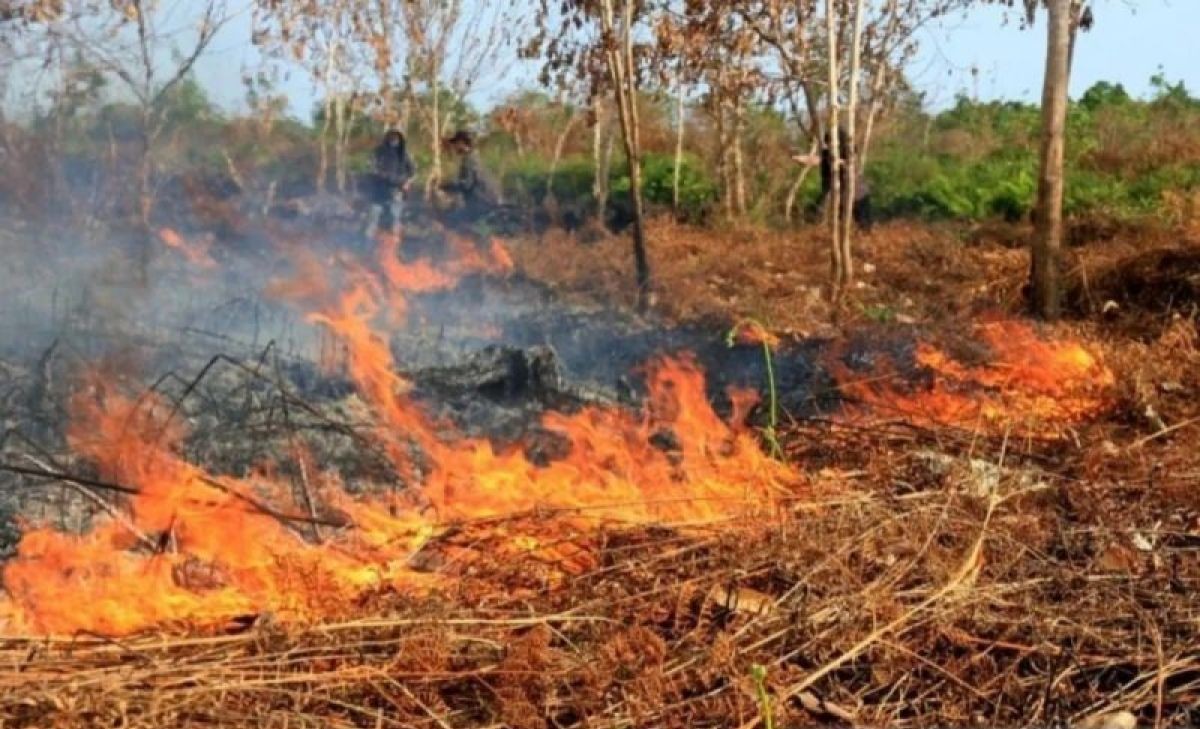
The threat of forest and land fires (karhutla) is once again looming over Indonesia in 2026 with the emergence of the extreme climate phenomenon dubbed Godzilla El Niño. The government is urging all stakeholders to enhance readiness from an early stage to prevent a repeat of major disasters like those in 2015, 2019, and 2023.
In the National Coordination Meeting for Karhutla Control 2026, Minister of Environment Hanif Faisol Nurofiq stressed that karhutla remains a serious issue with widespread impacts on ecosystems, public health, and the national economy.
Previous El Niño events have been recorded as the main trigger for spikes in karhutla in Indonesia. During the periods of 2015, 2019, and 2023, the area of fires increased significantly due to prolonged dry spells and increasingly dry land conditions.
“2026 faces the potential of the extreme Godzilla El Niño phenomenon, which could significantly heighten the risk of forest and land fires,” Hanif stated at the Ministry of Environment and Forestry office in South Jakarta on Tuesday (7/4).
He explained that regions with peat ecosystems remain the most vulnerable points. Provinces such as Riau, Central Kalimantan, and West Kalimantan, which have large peat areas, are at high risk of fires that are difficult to extinguish.
Based on historical data, from 2015-2025, several regions like Riau and West Kalimantan have shown a tendency for increasing fire areas in recent years. Meanwhile, other areas such as South Sumatra and Central Kalimantan indicate a downward trend, though they remain susceptible during El Niño occurrences.
In addition to climate factors, the main causes of karhutla are still dominated by human activities, particularly land clearing by burning, unsustainable peat management, and negligence.
To address this potential, the government is affirming a strategic shift from handling to prevention. Strengthened efforts include peatland rewetting, community education, zero-burn land management, and bolstering early detection systems.
“Furthermore, cross-agency coordination is being enhanced, involving the National Disaster Management Agency (BNPB), the Meteorology, Climatology, and Geophysics Agency (BMKG), TNI, Polri, local governments, business sectors, and communities,” he added.
On the enforcement side, the government assures that it will continue to impose strict sanctions on perpetrators of forest and land burning, both through criminal and administrative channels.
Nevertheless, Hanif acknowledged several ongoing challenges in karhutla control, such as the difficulty of extinguishing fires in peatlands, high restoration costs, limited funding sources, and suboptimal incentive mechanisms for regions that successfully keep their areas fire-free.
“Therefore, strengthening sustainable financing schemes, including fire-free village incentives, will be one of the focuses moving forward,” he emphasised.
The Ministry of Agriculture is optimising the use of 80,158 water pumps that have been distributed to farmer groups to anticipate potential drought due to the El Niño phenomenon.