
Global Urea Supply at Risk - Head of State-Owned Fertiliser Firm Claims Visits from These 2 Countries
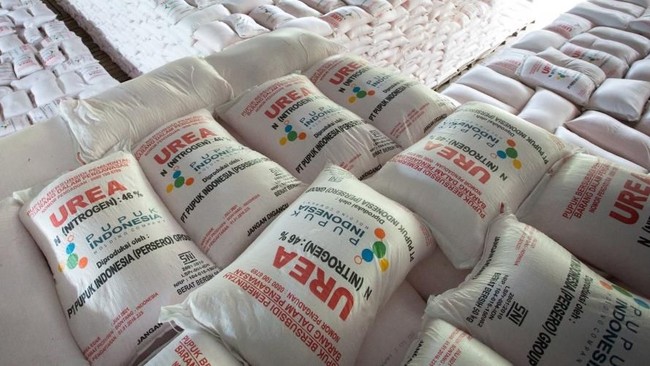
Jakarta, CNBC Indonesia - Amid escalating global geopolitical conflicts, Indonesia is seizing a significant opportunity in the fertiliser sector. PT Pupuk Indonesia (Persero)’s President Director Rahmad Pribadi stated that disruptions to global urea supplies due to obstacles in the Strait of Hormuz are opening up export opportunities for Indonesia.
“Indonesia is different. We are a urea exporting country, and the disruption in the Strait of Hormuz affects urea fertiliser. That means from the 10 million tonnes annual capacity in the Strait of Hormuz, that supply is lost from the market. Indonesia, Pupuk Indonesia exports between 1.5 to 2 million tonnes. So our position for fertiliser due to this geopolitics is all secure,” Rahmad said when met at the Ministry of Agriculture office in Jakarta on Monday (30/3/2026).
According to Rahmad, this situation even positions Indonesia as a key player in maintaining global food supplies.
“In the current geopolitical dynamics, Indonesia can actually become one of the saviours of the world food ecosystem. Why? Because the world is losing urea supply and Indonesia is a urea exporting country,” he said.
He revealed that several major countries are approaching Indonesia to secure fertiliser supplies.
“This afternoon I will meet or hold a special meeting with the Indian government, followed by the Australian government and then various others, all coming here because they know Indonesia’s strategic position today,” he disclosed.
Nevertheless, Rahmad emphasised that Indonesia will not immediately replace the entire lost global supply.
“No. It means like this, if replacing the whole thing, we can’t, but at least Indonesia is an exporter. So certainly after focusing on domestic needs, after domestic needs are met, we will export,” he explained.
He also assured that supplies of other fertilisers like NPK remain secure, despite rising global logistics costs.
“Secure, secure. Because it doesn’t go through the Strait of Hormuz… Ah yes, that’s across all commodities. So secure,” Rahmad said.
He explained that Pupuk Indonesia’s urea production capacity reaches 9.4 million tonnes per year, with export potential of 1.5-2 million tonnes depending on domestic needs.
“If domestic needs are high, we export 1.5 million tonnes. If they drop, we can export up to 2 million tonnes,” he said.
Meanwhile, PT Pupuk Indonesia (Persero)’s Corporate Secretary Yehezkiel Adiperwira emphasised that the primary priority remains fulfilling domestic needs, particularly subsidised fertiliser.
“Our focus now is fulfilling subsidised fertiliser first. This year’s subsidised fertiliser is 9.84 million tonnes. That must be distributed,” Yehezkiel said on the same occasion.
He added that exports will only be conducted if domestic needs have been met.
“So we fulfil the domestic focus first. If there’s excess, then we can export,” he said.
On the other hand, he noted that the rise in global fertiliser prices is a consequence of the disrupted world supply.
“Oh yes, so that’s the law of supply and demand. It’s the same as global oil prices, because supply is limited, demand is high, prices will definitely rise,” he explained.
Even though global prices are rising, Yehezkiel assured that domestic subsidised fertiliser prices remain stable.
“But Pupuk Indonesia’s commitment to subsidised fertiliser, the HET remains in accordance with government regulations. So for domestic farmers, subsidised farmers in the country, hopefully or we ensure they will not be affected by this, by this war,” he stressed.
With total production capacity reaching 14.8 million tonnes per year, Indonesia is considered to be in a strategic position to leverage the surge in global demand, without sacrificing domestic needs.