
Global South Emerges as New Battleground for Manufacturing Investment
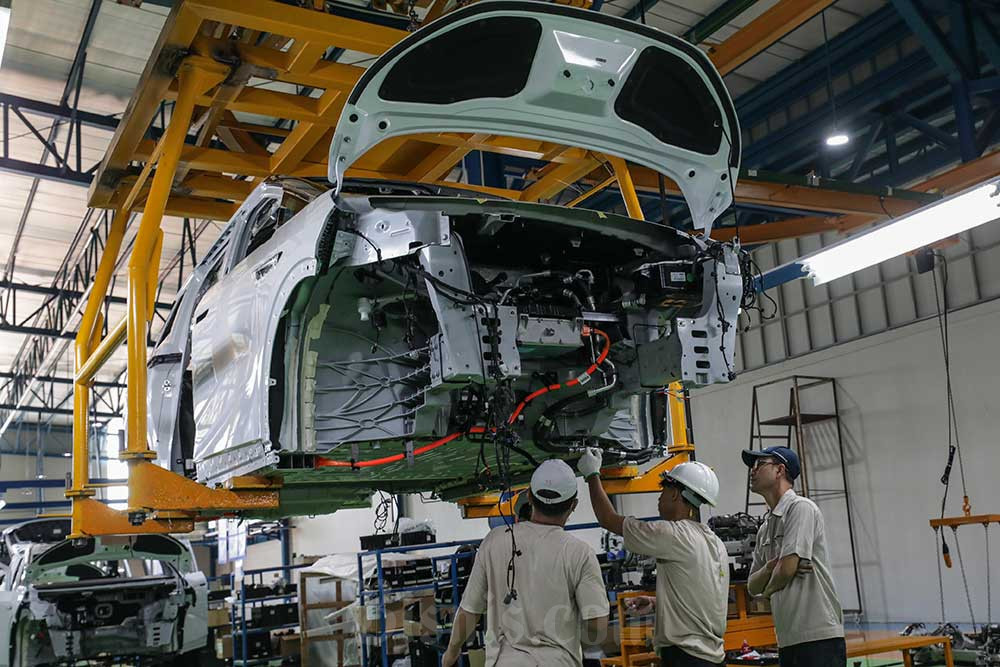
Bisnis.com, Jakarta — The shift in investment flows towards developing countries or the Global South is seen as both an opportunity and a new challenge for Indonesia to accelerate industrialisation and strengthen its position in the global supply chain.
Warih Andang Tjahjono, Advisory Board member of the Industrial Engineering Community at Bandung Institute of Technology, said developing countries are now the primary destination for global investors as economic growth slows in major nations such as China, the United States, and Europe.
He added that this situation has turned regions such as Asia, Latin America, Africa, and the Middle East into new battlegrounds for attracting foreign direct investment (FDI).
‘Now we refer to Global South countries. The competition is intensifying, and Indonesia must continuously enhance its investment appeal,’ he said at an industrial and investment forum on Tuesday, 26 May 2026.
He explained that developed nations are facing domestic and geopolitical challenges affecting global investment flows. The United States is focusing on strengthening its own industry, while Europe remains under geopolitical pressures.
China, meanwhile, has experienced a slowdown in economic growth compared to previous years of 8-9% annual expansion. Current growth is around 5-6%.
‘China has even shifted to domestic consumption rather than investment-driven growth. That is why the Global South is crucial. It includes South America, Africa, the Middle East, India, and us in Asia,’ he said at the Bisnis Indonesia Forum at the Bisnis Indonesia office on Monday, 25 May 2026.
Amid these changes, Warih noted that Global South nations such as Indonesia, India, Brazil, and Mexico are competing to become new global manufacturing hubs. He said Indonesia must respond by strengthening its investment climate and industrial competitiveness to avoid falling behind other developing nations aggressively attracting global industrial relocations.
‘Brazil and Mexico are growing stronger. When their manufacturing sectors are robust, they become strong exporters,’ Warih said.
He assessed that Indonesia has significant advantages to win this competition, including a large domestic market, demographic dividend, and abundant natural resources. However, Indonesia must act faster to strengthen its manufacturing sector, which currently contributes 18-19% to gross domestic product (GDP).
By contrast, manufacturing contributes 27-40% to national economies in developed nations such as Japan, South Korea, China, and Germany. ‘If Indonesia wants to be a strong nation, manufacturing must be a cornerstone,’ he said.
Warih also stressed the importance of FDI as a tool for integrating Indonesia into the global supply chain. Foreign investment, he said, is not just about bringing in capital but also opening access to export markets and international production networks.
‘FDI is not just about inflows of money, but about Indonesia becoming part of the global supply chain,’ he said.
Furthermore, he noted that the government needs to be more aggressive in building a positive perception of Indonesia among global investors amid increasingly fierce competition among developing nations.