
Global Oil Prices Surge Following Ship Attacks Near Strait of Hormuz
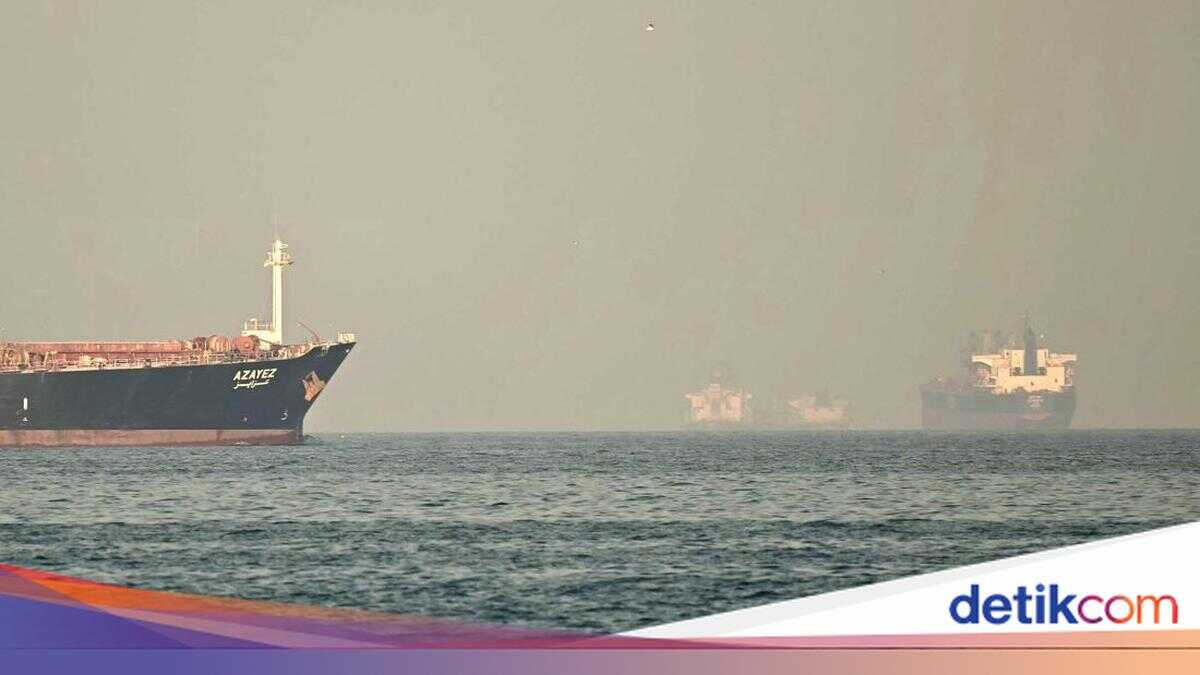
Global oil prices surged after at least three vessels were attacked near the Strait of Hormuz. Attacks across the Middle East were carried out by Iran in response to ongoing strikes by the United States and Israel.
Two ships came under fire, and an “unidentified projectile” was reported to have exploded in close proximity to a third vessel, according to the United Kingdom Maritime Trade Operations Centre (UKMTO).
Iran has warned vessels against transiting through the strait. These ships carry approximately 20% of the world’s oil and gas supplies.
International shipping ground to a near-halt at the strait’s entrance, with analysts warning that prolonged conflict could push oil prices significantly higher.
During morning trading in Asia on Monday, Brent crude climbed more than 7% to $78.25 (£58.30) per barrel, whilst US-traded oil rose 7.3% to $71.93.
“The market is not panicking,” said Saul Kavonic, head of energy research at MST Research, speaking to the BBC. “The market will be watching for signs that traffic through the Strait of Hormuz returns to normal, which would cause oil prices to fall again,” he added.
Several analysts have cautioned that oil prices could exceed $100 if the conflict persists.
On Sunday, the OPEC+ group, comprising oil-producing nations including Saudi Arabia and Russia, agreed to increase their production by 206,000 barrels per day. This was undertaken to help curb the price increases, though some experts doubt this will prove particularly effective.
Edmund King, president of the Automobile Association, warned that the disruption could drive oil price increases globally. “Unrest and bombings in the Middle East will certainly act as a catalyst for disrupting global oil distribution, which will inevitably cause price increases,” he said. “The magnitude and duration of the oil price increase depends on how long the conflict lasts.”
The Islamic Revolutionary Guard Corps (IRGC) stated that three tankers flagged to Britain and the United States have been “struck by missiles and set ablaze”. Britain and the United States have not yet commented.
The UKMTO reported that “several security incidents” have been recorded across the Arabian Gulf and the Gulf of Oman. They advised vessels to “transit with caution”.
At least 150 tankers have anchored in gulf waters beyond the Strait of Hormuz, although some Iranian and Chinese vessels have transited through today, according to vessel tracking platform Kpler.
“Due to Iranian threats, the strait is effectively closed,” said Homayoun Falakshahi from Kpler, speaking to BBC News. “Ships have taken precautionary measures to avoid entry because the risks are too high and their insurance costs have rocketed.”
He noted that the United States would likely attempt to protect the shipping lane which, if successful, would prevent oil price spikes, but if the strait remains closed for an extended period, prices could rise “far, far higher”.
The UKMTO stated that two vessels, which they did not identify, struck unidentified projectiles, resulting in fires. An unidentified projectile “exploded in close proximity” to a third vessel, it stated.
It added that the crew of that vessel, also unidentified, survived and remained in good condition.
A fourth incident in the area was also reported to the UKMTO, which according to them involved crew evacuation, though the cause remained unclear.
Private maritime security firm Vanguard Tech stated that the attack incidents had been reported in accordance with details provided by the UKMTO, involving vessels flagged to Gibraltar, Palau, the Marshall Islands, and Liberia.
Danish container shipping group Maersk stated in a statement on Sunday that it would suspend sailings through the Bab el-Mandeb Strait and the Suez Canal, diverting ships around the Cape of Good Hope instead.
Iran and Israel launched new air strikes against each other on Sunday, following US-Israeli strikes that killed Iran’s Supreme Leader Ayatollah Ali Khamenei on Saturday and triggered retaliatory strikes across several Middle Eastern nations. The strikes were reported to have occurred in Dubai, United Arab Emirates; Doha, capital of Qatar; Bahrain; and Kuwait.