
Global Oil Prices Surge: Can Pertamina Withstand Fuel Price Increases?
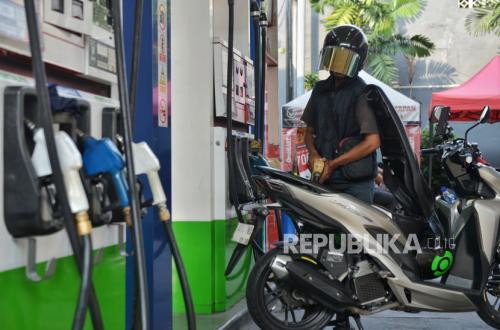
Energy sector practitioner Hadi Ismoyo has warned that surging global oil prices are placing an increasingly heavy burden on PT Pertamina (Persero) if domestic fuel prices are not adjusted accordingly. Global crude oil prices have now breached approximately USD 111 per barrel, considerably exceeding the budget assumption used in the State Revenue and Expenditure Budget (APBN) which was set at roughly USD 70 per barrel.
This situation is creating significant pressure on Indonesia’s energy management. The wide gap between the APBN assumption and market prices threatens to increase both fuel subsidies and energy compensation costs.
“It is difficult for Pertamina without price adjustments or increased fuel subsidy allocations without raising prices. Meanwhile, the government’s fiscal space is also limited. The choices are extremely difficult,” Hadi told Republika.co.id on Monday (9 March 2026).
According to him, rising global oil prices are driving increased energy production costs. This situation ultimately affects the prices of various derivative products, including fuel marketed domestically.
Hadi explained that Pertamina operates as a corporation that must nonetheless maintain the health of its business. In the energy industry’s standard practice, increases in raw material costs are typically followed by price adjustments for the end product.
“Pertamina is a corporation, so when raw material costs rise, product prices must automatically rise as well. It is fair business practice. The question is where and by whom this increase will be absorbed,” said the figure, who also serves as an advisory council member of the Indonesian Association of Oil and Gas Engineers (IATMI) for the 2025–2028 period.
Amid these pressures, the government has several options to mitigate the impact of rising prices on the public, according to him. One such option involves increasing energy subsidy allocations through fiscal policy adjustments.
Hadi believes this approach can be implemented by reviewing the government’s budgetary structure and reorganising the priorities of state expenditure programmes. “The approach that does not burden society is the option of increasing subsidy allocations, whereby the government needs to revisit the APBN. Using a scale of priorities to cut, optimise, and streamline programmes,” he stated.
He also believes the government must accelerate strategic measures to reduce dependence on fuel. These efforts can be pursued through energy conversion programmes, including converting fuel to gas as well as accelerating the adoption of electric vehicles.
In the long term, expanding exploration activities in the upstream oil and gas sector is also considered important for strengthening Indonesia’s energy resilience. Assigning greater responsibility to Pertamina in exploration activities could form part of a strategy to strengthen domestic energy supply.