
Global Oil Prices Soar as Omani Crude Breaks Through $100 a Barrel; Will Fuel Prices Rise?
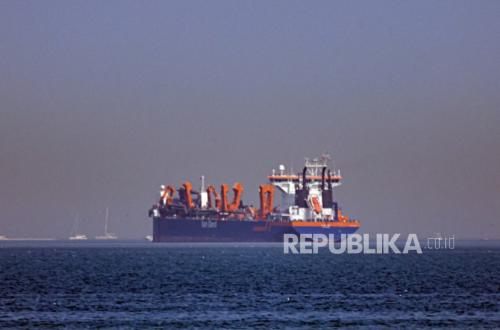
Actions by the United States and Israel against Iran, and the retaliatory responses that followed, have triggered wide-ranging effects in the region surrounding Iran, prompting volatility in world crude oil prices.
‘Official Oman crude price surpassed $100 per barrel on Friday, 6 March 2026, reaching $100.31 per barrel for May delivery,’ the Qatar News Agency (QNA) reported on Saturday, 7 March 2026.
The QNA report noted that Omani crude rose by $5.84 from Thursday’s price of $94.47 per barrel. The average monthly price of Omani crude for March deliveries stood at $62.17 per barrel, up $0.08 per barrel from the February average.
Earlier, Jorge Leon, Senior Vice President and Head of Geopolitical Analysis at Rystad Energy, explained that the closure of the Strait of Hormuz and the escalation of the conflict in Iran could have a direct impact on global oil prices. ‘At the start of trading on 2 March, Brent crude was expected to jump around $20 per barrel as risk premia in the market rose,’ Leon said.
According to Leon, Iran’s retaliation has been far more aggressive than before, including targeting US military bases in the region and Gulf allies. ‘This marks a structural expansion of the conflict, not merely symbolic attacks,’ he added.
The most tangible impact on oil markets is the disruption of tanker traffic through the Strait of Hormuz. About 15 million barrels per day of crude oil, equivalent to almost 30 percent of global maritime oil trade, passes through that route.
If the disruption continues, around eight to ten million barrels per day of global oil supply could be removed from the market, though some can be diverted via alternative routes.
Saudi Arabia has the East-West pipeline to the Red Sea with a capacity of around five million bpd. The United Arab Emirates can also utilise the Abu Dhabi pipeline with a capacity of around 1.5 million bpd. However, that capacity is considered insufficient to fully replace the volume that typically passes through Hormuz.
‘Whether the strait is closed physically or avoided in practice due to high risk, the impact on oil flows is essentially the same,’ Leon explained.
Global oil prices breached $92 per barrel. Quoted from Yahoo Finance, Brent futures rose 8.38 percent to $92.57 per barrel. Meanwhile, West Texas Intermediate futures rose more than 11 percent to $90.02 per barrel.
Prices surged after the US president posted on Truth Social that there would be no ‘agreement with Iran unless surrender unconditionally’. The US-Iran conflict has disrupted oil and gas production and halted shipments along the important shipping route, the Strait of Hormuz. This has heightened concerns about the impact on the global economy.
Qatar Energy Minister Saad al-Kaabi warned on Friday that exporters in the Gulf region may have to suspend production. He said the recovery of shipments after Iran’s drone attacks could take ‘weeks to months’. He also told the Financial Times that a war in the Middle East could ‘bring down the global economy.’
This sharp rise occurred after prices had briefly fallen earlier in the session, following reports that the Trump administration was considering possible intervention to help address the recent surge.
Matt Britzman, senior equity analyst at Hargreaves Lansdown, previously said that measures under consideration included releasing crude oil from the US emergency reserves, granting exemptions on fuel blending requirements, and possibly the US Treasury Department trading crude futures.
The US also granted a 30-day exemption for India to buy Russian oil on Thursday night.
However, Britzman warned of the potential impact of higher oil prices on the global economy. ‘Price increases tend to have an immediate effect on consumers through higher fuel costs, which in turn risks reigniting inflation pressures when central banks are hoping for some relief,’ he said.