
Global Oil Prices Plunge 10% After Strait of Hormuz Reopens, Yet Pertamax Prices Rise
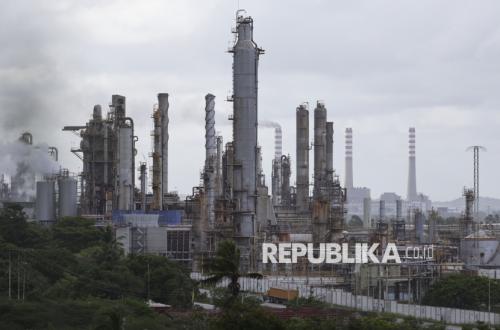
REPUBLIKA.CO.ID, JAKARTA – Global oil prices have plunged more than 10% after Iran declared that the Strait of Hormuz would be “fully open” to commercial ships for the remainder of the ceasefire period. According to ABC, Saturday (18/4/2026), Brent crude opened around $98, then fell to $86.52 per barrel by 10:50 EDT, less than two hours after the announcement was made by Iranian Foreign Minister Abbas Araqchi via social media platform X.
“The route for all commercial ships through the Strait of Hormuz is declared fully open during the remainder of the ceasefire,” said Abbas.
Meanwhile, West Texas Intermediate (WTI) crude prices briefly hit $80.56 after opening around $93.
Previously, oil prices had surged to nearly $120 per barrel and threatened global economic stability during the conflict.
The Strait of Hormuz is a strategic route through which about one-fifth of the world’s crude oil distribution passes. This route was disrupted since Iran closed access following attacks by the United States (US) and Israel in early March.
Kpler data shows more than 500 million barrels of crude oil and condensate were removed from the global market due to the disruption, making it one of the largest energy supply interruptions in modern history.
Although the reopening of the Strait of Hormuz has boosted market optimism for energy supply chain recovery, shipping industry players remain cautious.
US President Donald Trump stated that the blockade on Iranian ports remains in place, despite the announcement of the shipping route’s opening.
Kathleen Brooks, Research Director at European financial brokerage firm XTB, described this development as a positive signal for the market.
“This is the biggest development during the ceasefire and offers hope that the conflict will end soon and the supply chain can return to normal,” she said.
However, the International Maritime Organization (IMO) is still verifying the announcement.
The Norwegian Shipowners’ Association (NSA) also stated that more clarity is needed, particularly regarding security, the presence of mines, and on-the-ground technical implementation.
“We welcome this if it is a step towards full opening,” said NSA Chief Executive Knut Arild Hareide.
Global shipping company Maersk also said it would take a cautious approach in responding to the situation.
Since the conflict began, the company has followed security recommendations to avoid sailing through the Strait of Hormuz.
“Any decision to cross the strait will be based on risk assessment and close monitoring of the security situation,” said a Maersk spokesperson.