
Global Oil Prices Breach US$100, Economists Advise Government Against Hasty Subsidy Fuel Price Increase
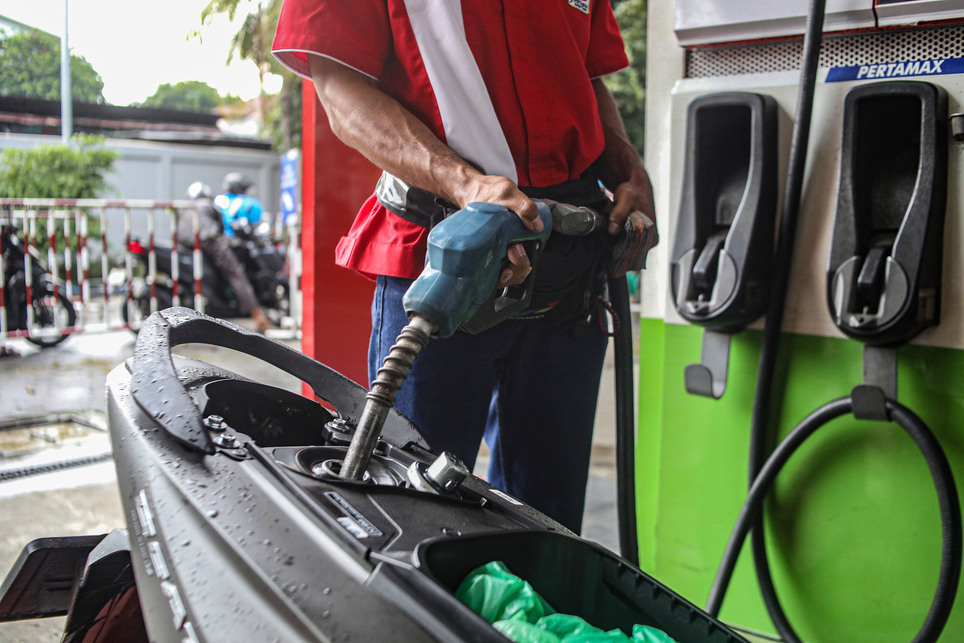
Global crude oil prices have officially breached the psychological level of US$100 (approximately Rp1.7 million) per barrel. The surge has raised concerns about its potential impact on the price of subsidised fuel in Indonesia.
Previously, Minister of Finance Purbaya Yudhi Sadewa stated that the government is open to adjusting fuel prices should global oil prices rise to very high levels and burden the state budget.
Yusuf Rendy Manilet, an economist at the Center for Reform on Economics (CORE), acknowledged that raising subsidised fuel prices remains an option to be considered. However, he emphasised that this must be done at the right moment.
“If fuel price increases are implemented when inflationary pressures are high, the impact could be layered. Fuel prices are part of administered price components, so any increase will directly drive inflation,” Yusuf said on Monday (9 March).
Additionally, he noted, attention must be paid to volatile food prices, which are currently sensitive, particularly if the adjustment coincides with Ramadan. During this period, public demand for food typically increases, causing prices of commodities such as rice, meat, chilli, and cooking oil to rise.
“If the government simultaneously raises fuel prices, distribution and logistics costs will also increase, which could ultimately amplify food price increases in the market. Therefore, in my view, fuel price increases should not be implemented at this time, particularly if the risk is to strengthen inflationary pressures,” Yusuf explained.
This could create a “double shock,” he said—a rise from government-regulated prices alongside increases in volatile food prices driven by seasonal factors such as Ramadan.
According to Yusuf, the government’s first step should be to prepare various policy scenarios, particularly to anticipate whether this oil price increase is temporary or likely to persist for an extended period.
“This is important because high oil prices will directly increase the energy subsidy burden in the state budget. In such a situation, the government should also begin considering budget refocusing and reallocation,” he said.
This means state expenditure should be restructured by prioritising truly essential programmes, whilst less urgent spending could be postponed. Through such steps, fiscal pressure from rising energy prices can still be managed without resorting to overly drastic policies.
“In my view, the wiser approach is to temporarily hold off on fuel price adjustments whilst improving subsidy design to be more targeted, and ensuring food supply stability during Ramadan. In this way, the government can maintain fiscal stability without imposing excessive additional pressure on public purchasing power,” he concluded.