
Global Oil Price Nears US$93, Putting Fuel-Price Policy Under Strain
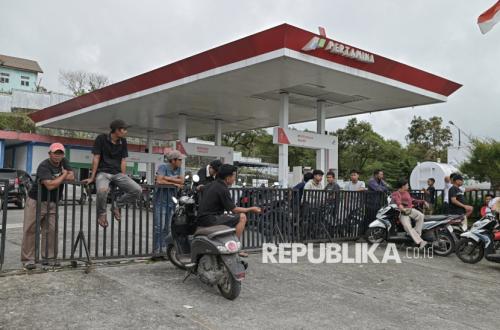
Global oil prices have surged, nearing US$93 per barrel, increasing pressure on domestic fuel price policy. Oil and gas practitioner Hadi Ismoyo told Republika.co.id on Sunday (8 March 2026) that the rise in global energy prices narrows the government’s policy space to maintain stability in fuel prices.
Oil prices are well above the government’s assumed price in the State Budget (APBN), which was around US$70 per barrel. This puts the government and PT Pertamina (Persero) in a difficult position between holding fuel prices and expanding the energy subsidy burden.
‘Prices have surged to US$93 per barrel, while the government’s assumption is US$70 per barrel. It is burdensome for Pertamina if there is no price adjustment or an expansion of the BBM subsidy ceiling without raising prices. On the other hand, fiscal space is tight. This is a very tough choice,’ he told Republika.co.id on Sunday.
He said that as an energy company, Pertamina operates on a business principle that takes input costs into account. A rise in crude oil prices will affect the cost of producing fuels sold domestically.
This condition means the company cannot fully absorb the impact of rising global energy prices without government policy support. The situation raises questions about who will bear the burden of energy price increases.
‘Pertamina is a corporation, so when input costs rise, products must adjust accordingly. That is the business principle. The question is where and by whom will the increase be absorbed?’ said the figure, who is also a member of the Advisory Council of the Indonesian Petroleum Engineering Experts Association for 2025–2028.
Hadi believes the government has the option of withstanding the pressure of rising BBM prices by expanding the energy subsidy ceiling. This step could be taken by revising the APBN to prioritise spending, so the impact of energy price increases is not felt directly by the public.
‘One way that does not burden the public is to increase the subsidy ceiling by reassessing the APBN. The government can use prioritised budgeting to cut or postpone non-essential programmes,’ he said.
In the medium to long term, he believes the government needs to strengthen energy conversion programmes. Converting BBM to gas and converting motorcycles to electric vehicles are seen as ways to reduce the need for energy subsidies.