
Global Oil Crisis Unstoppable, Economists Deem Fuel Price Hike Rational to Safeguard State Budget
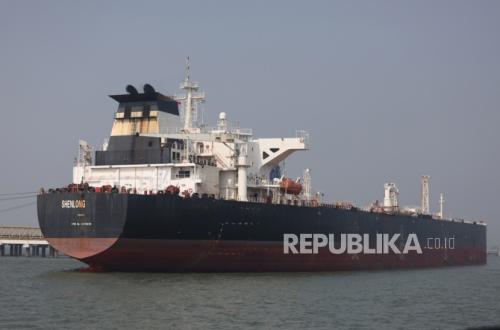
A spike in global oil prices resulting from geopolitical conflicts in the Middle East is considered to make an increase in domestic fuel (BBM) prices increasingly difficult to avoid. In this situation, price adjustments are described as a rational measure to maintain fiscal stability and avoid deeper pressure on the State Revenue and Expenditure Budget (APBN).
Economist from Universitas Negeri Surabaya (Unesa), Hendry Cahyono, assesses that the current global pressures have exceeded the basic economic assumptions used by the government. He mentions that global oil prices could potentially breach above 100 US dollars per barrel, far from the assumption of Indonesia Crude Price (ICP) in the 2026 APBN at 70 US dollars per barrel.
“The current geopolitical situation places the government in a difficult dilemma. It would involve maintaining purchasing power at the risk of neglecting fiscal discipline or raising BBM prices with the risk of inflation or even stagflation,” said Hendry when contacted on Thursday (26/3/2026).
In this context, Hendry views the fuel price increase as an increasingly rational choice. Because if prices are not adjusted, the energy subsidy burden will surge sharply and risk widening the APBN deficit beyond the safe 3 percent limit against gross domestic product (GDP).
“The decision to hold BBM prices means the government chooses to bear the burden through deficit expansion. This strategy is effective in curbing inflation but risks long-term fiscal stability,” he said.
He explains that every one US dollar per barrel increase in Indonesia Crude Price potentially adds to the energy subsidy and compensation burden by up to Rp 10.3 trillion. Additionally, the APBN deficit could widen by around Rp 6.8 trillion for each such increase.
Assuming oil prices are in the range of 85–92 US dollars per barrel, Hendry estimates the Pertalite price increase at 5–10 percent or to Rp 10,500 to Rp 11,000 per litre from the previous Rp 10,000. Meanwhile, the subsidised diesel price is estimated to rise to Rp 7,150 to Rp 7,500 per litre from the previous Rp 6,800.
In this scenario, the APBN deficit is estimated to still be at the safe threshold, approaching 3 percent of GDP.
However, if global oil prices breach above 100 US dollars per barrel for a prolonged period, then the BBM price increase could be higher. Pertalite prices could rise 15–20 percent to Rp 11,500 to Rp 12,000 per litre, while diesel rises to Rp 7,800 to Rp 8,200 per litre.
“In this condition, the APBN deficit could exceed 3 percent or around 3.6 percent of GDP if there is no price adjustment,” said Hendry.
He emphasises that without a BBM price increase, fiscal pressures will become heavier and potentially disrupt overall economic stability. This is because the government must continue to add subsidies amid limited fiscal space.
Additionally, the long-term risk that emerges is a reduction in the state’s capacity to finance other priority programmes, as the budget is absorbed to cover the surge in energy subsidies.
Nevertheless, Hendry reminds that BBM price increase policies still have consequences for public purchasing power. Therefore, the government needs to prepare mitigation steps so that the impact is not too deep.
“A price increase without social safety net compensation will cause stagflation because public income does not rise but is eroded by inflation,” he said.
Thus, the BBM price increase in the current situation is deemed not merely a policy choice, but a logical consequence of uncontrollable global pressures. The government is demanded to balance maintaining fiscal health and protecting public purchasing power through measured and targeted policies.