
Global Oil Crisis Looms as International Energy Agency Proposes Largest-Ever Strategic Reserve Release
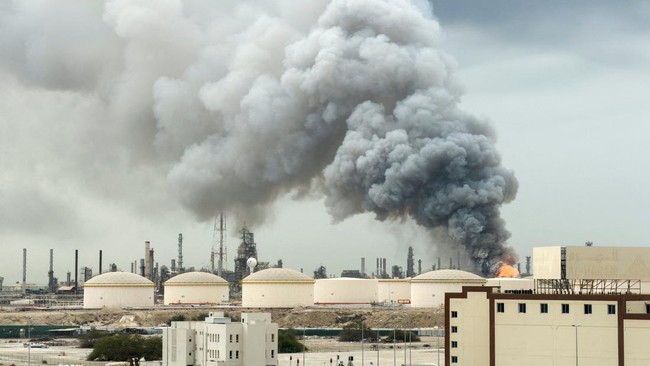
Jakarta—The International Energy Agency (IEA) has proposed releasing the largest strategic oil reserve ever mobilised to address surging crude oil prices triggered by the US-Israel conflict with Iran, according to a report from the Wall Street Journal citing officials familiar with the matter.
“The release would exceed the 182 million barrels mobilised by IEA member states in 2022 following Russia’s invasion of Ukraine,” the newspaper reported on Wednesday, cited by AFP.
The proposal was circulated at an emergency meeting of energy officials from 32 IEA member nations on Tuesday. A decision was expected imminently.
The report helped stabilise crude oil prices. On Wednesday morning, Brent crude fell 0.84 per cent to US$87.06, whilst West Texas Intermediate dropped 1.02 per cent to US$82.60.
Earlier in Asian trading, WTI had surged more than 5 per cent after US President Donald Trump escalated threats regarding the strategically vital Strait of Hormuz, which has been effectively closed by Iran.
Meanwhile, Asian equity markets gained, with Tokyo’s Nikkei index rising approximately 2 per cent and South Korea’s Kospi index increasing around 2.5 per cent.
Oil “Apocalypse”
The previous day, global oil giant Saudi Aramco warned markets that prolonged disruptions at the Strait of Hormuz could trigger “catastrophic consequences” for the oil industry and global economy. Aramco Chief Executive Amin Nasser stated that the Iran-related conflict has rendered the world’s most vital energy shipping route nearly paralysed.
“There will be catastrophic consequences for the global oil market and the longer this disruption continues, the more drastic the impact on the global economy,” he told reporters during the company’s financial results press conference, cited by Reuters.
Nasser emphasised that this crisis represents one of the largest disruptions ever experienced by the energy industry in the region, unprecedented in scale.
“Whilst we have faced disruptions in the past, this crisis is the largest that the oil and gas industry in this region has ever confronted,” he said.
Aramco acknowledged it currently cannot export oil from the Gulf as tanker vessels cannot load cargo. The company is relying on global inventories and the East-West pipeline, which transports oil to Yanbu port on the Red Sea with capacity of up to 7 million barrels daily.
However, even with this alternative route, Nasser cautioned the market would still face substantial supply losses. “You are talking about nearly 350 million barrels in supply disruptions that will come out of the market,” he said.