
Global Investors Withdraw from Indonesia: 'I Have Zero Exposure to Indonesia'
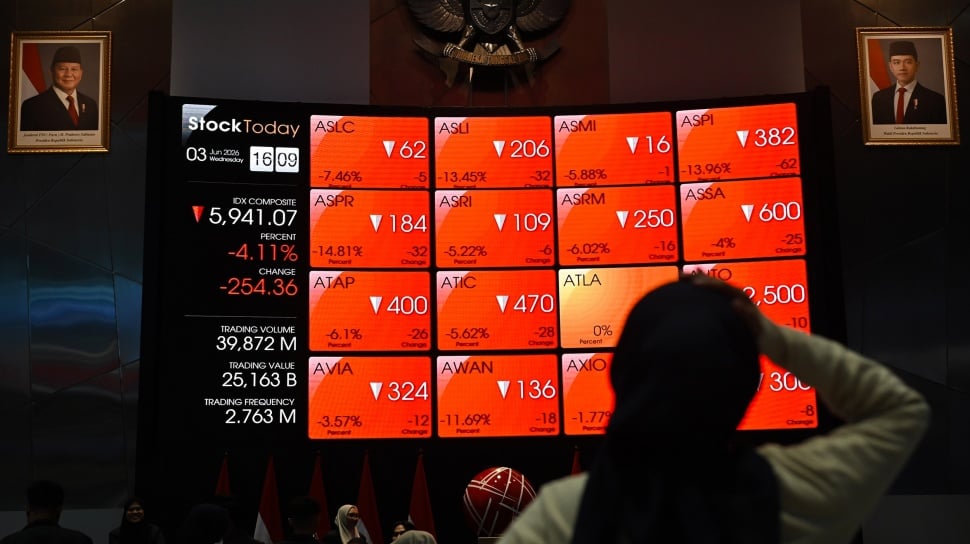
Global investor confidence in Indonesia’s macroeconomic stability is reportedly under severe pressure. Currently, the Indonesian stock market is posting the fastest decline globally, whilst the rupiah exchange rate continues to slump, touching its lowest level in history. Just five months after reaching a record high, the composite domestic stock price index has plunged 36 percent, making it the worst performer amongst more than 90 global indices tracked by Bloomberg. This mass sell-off marks a dramatic turning point for the commodity-rich nation, which previously had always been a top allocation in emerging market portfolios. Negative sentiment from foreign investors was triggered by concerns over populist agendas and increasingly aggressive economic intervention under the administration of President Prabowo Subianto, despite Indonesia having long been known as very welcoming to foreign capital. This negative sentiment spurred outflows worth billions of dollars from the Indonesian bond market. The sentiment shift amongst global fund managers is clearly illustrated by the decisions of top executives at foreign financial institutions. The scale of large trading in Asia is now assessed to have shifted towards a massive reduction of Indonesian assets. K2 Asset Management Hedge Fund Research Head George Boubouras revealed that after decades of investing in the country, his firm liquidated its entire portfolio position starting in 2024. ‘I have zero exposure to Indonesia,’ he said, as per a Bloomberg report. ‘I won’t give them an opportunity.’ Since officially taking office, President Prabowo has set an annual economic growth target of 8 percent, launched a national free lunch programme, expanded the state’s role in the economy, and injected massive funds into BPI Danantara. The latest policy to take direct control over key commodity exports in order to curb tax fraud figures has actually triggered a mass sell-off in exporter stocks. For the majority of market participants, the end of former Finance Minister Sri Mulyani Indrawati’s term in 2025 became a crucial turning point. Sri Mulyani, who was long viewed as the guarantor of fiscal discipline, had previously succeeded in convincing markets that Indonesia would maintain conservative budget management to safeguard its investment-grade debt rating. J.P. Morgan Private Bank Hong Kong Head of Asia Rates and FX Strategy Tang Yuxuan assessed the situation as a typical risk. ‘Domestic political uncertainty is a common emerging market (EM) risk, and global investors tend to react by remaining in a neutral position until a predictable situation re-emerges,’ Tang Yuxuan said.