
Global Investors Call for 'Sell Indonesia' as Trust Evaporates
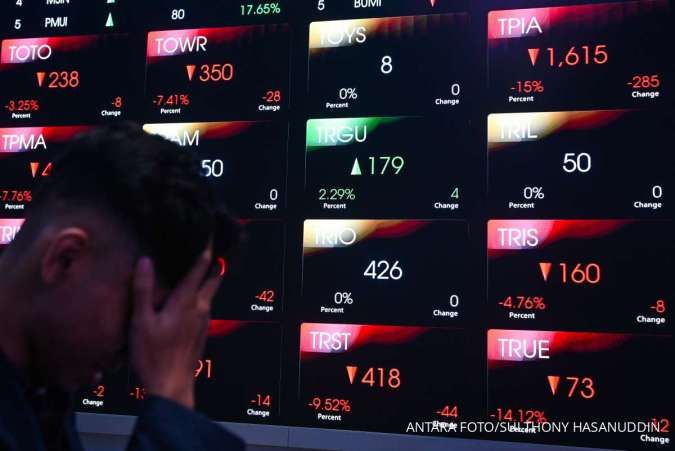
The call to sell Indonesian stocks is growing louder among global investors as confidence in the country continues to erode. This is reflected in the nation’s main stock index recording the swiftest decline globally, whilst the rupiah touched its lowest level in history. Just five months after reaching a record high, Indonesia’s benchmark stock index has plunged 37%, making it the worst performer this year among more than 90 global indices tracked by Bloomberg. The rupiah has weakened over 7%, whilst foreign investors have pulled billions of dollars from Indonesian government bonds. “The main trend in Asia right now is ‘Sell Indonesia’,” said George Boubouras, head of research at hedge fund K2 Asset Management, which manages about US$4.3 billion. After decades of investing in Indonesia, he exited the market completely in 2024. Since taking office in October 2024, Prabowo has targeted 8% annual growth, expanded a free school meals programme, increased the state’s role in the economy, and channelled funds into Danantara, Indonesia’s sovereign wealth fund. His latest move to take direct control over key commodity exports to curb tax avoidance triggered a sell-off in exporter shares. For many investors, the resignation of former Finance Minister Sri Mulyani Indrawati last year was a turning point. She was known as a guarantor of fiscal discipline who convinced markets that Indonesia would maintain conservative budget management, which previously helped secure an investment-grade credit rating and attract long-term foreign capital. Now, investors are beginning to doubt that commitment. “Domestic political uncertainty is a typical risk in emerging markets, and global investors tend to wait until predictability returns,” said Yuxuan Tang, head of Asia rates and foreign exchange strategy at JPMorgan Private Bank in Hong Kong. The rupiah has become the clearest expression of market anxiety, falling around 14% since Prabowo took office and becoming Asia’s weakest currency this year. Middle East conflicts and high energy prices have worsened Indonesia’s external position, given the country remains a net oil importer. Pressure has also spread to the bond market. Foreign investors have reduced their holdings of Indonesian government bonds by Rp86 trillion (US$4.8 billion), around 9%, since last August. Those bonds have lost more than 8% for dollar-based investors this year, compared with a 1.6% gain for emerging-market bonds overall, despite several interventions by Bank Indonesia. Another concern arises from Bank Indonesia’s continually rising ownership of government bonds, now around 27%, a high figure for a developing economy. Many investors question whether this move increasingly resembles quantitative easing. “The focus is on the weakening rupiah outlook, as well as concerns about macro imbalances and fiscal policy credibility,” said Gary Tan, portfolio manager at Allspring Global Investments. The decline has also battered the stock market. The Jakarta Composite Index (IHSG) has plunged more than 30% this year, amid fears of a sovereign credit rating downgrade. MSCI even warned of the possibility of downgrading Indonesia’s status from an emerging market to a frontier market, triggering one of the worst stock sell-offs in decades. Investors are questioning the implementation of government policies, from commodity export controls and state spending programmes to anti-corruption efforts. The concern is not just about the policy concepts, but the lack of clarity in their execution. “If I cannot trust the plumbing, I do not want to be the last one out,” said Ana Isabel Gonzalez Encinas, Chief Investment Officer at Farringdon Asset Management in Singapore. What the market needs now is fiscal certainty, central bank independence, transparency regarding Danantara’s role, and clarity on the direction of economic policy. Indonesia’s ability to restore predictability will determine how quickly foreign capital returns. “The government needs partners, bondholders. Until that is achieved, the ‘sell Indonesia’ strategy remains in place,” concluded Boubouras.