
Global Hijri Calendar: Between the Needs of the Ummah and Political Reality
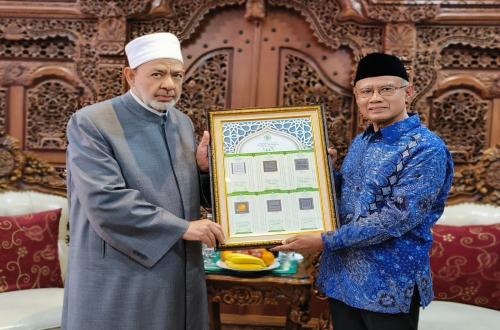
Although there were minor tensions, such as declarations of ‘haram’ for announcements of holidays by non-governmental authorities and the cancellation of permits for Eid al-Fitr prayers in Sukabumi and several other locations in Indonesia, the differences in Eid al-Fitr 1447/2026 were generally conducive overall, with no significant friction.
Every year, Muslims around the world repeat the same debate: when does Ramadan begin, when is Eid al-Fitr, and when is Eid al-Adha. In one regional area, it can differ, and even within a single country, holidays often fall on different days.
This phenomenon is often seen as something “normal”. However, in an increasingly globally connected world, a more fundamental question needs to be asked: how long will Muslims live without a single time system that unites them?
This is where the idea of a global Hijri calendar finds its relevance.
In modern life, the calendar is not just a tool for worship, but also an instrument of civilisation. It regulates social rhythms, the economy, education, and even international relations.
Imagine a Muslim ummah of more than two billion people without a uniform calendar. Eid al-Fitr can fall on different days, even in neighbouring countries. This is not just symbolic, but also concerns the global coordination of the ummah.
In this context, the idea of a global Hijri calendar is no longer merely an academic discourse, but a real need.
Efforts towards it have actually been made. The international conference in Istanbul in 2016, initiated by ‘Diyanet’ (the Special Bureau for Islamic Religious Affairs under the Presidential Office) of Turkey, produced a concept for a global calendar based on astronomical calculations with the principle of “one day, one world”. This model also received support from organisations like Muhammadiyah in Indonesia.
Scientifically, this system is very robust. With modern astronomical advancements, the moon’s position can be calculated with high precision. There is no longer any uncertainty in determining the start of the month.
So the question is: if it is scientifically possible, why has it not been realised?
The Problem Is Not Science, But Authority
The main obstacle to a global Hijri calendar is not science, but authority.
In Islamic tradition, determining the start of the month is not just a technical matter, but also related to religious and political authority. Each country has its own mechanism, and in many cases, the determination of holidays becomes a symbol of sovereignty.
No country is easily willing to relinquish this authority to a global system.
Here lies the fundamental problem: Muslims have one religion, but do not have a single globally recognised authority.
As a result, every effort to unify the calendar always encounters national interests and differences in schools of thought.