
Global Gold Prices Surge on First Day of Ramadan
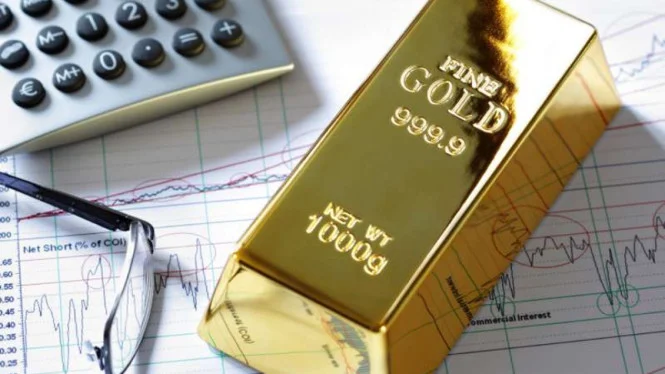
Jakarta, VIVA – Global gold prices surged sharply on the first day of fasting during trading on Wednesday, 19 February 2026. The spike occurred amid various global geopolitical sentiments and market anticipation of the Federal Reserve’s meeting minutes.
Spot gold soared 2.6 per cent to US$5,005.44, or approximately Rp 84.7 million (estimated at an exchange rate of Rp 16,930 per US dollar) per troy ounce. The increase marked a rebound from a prior decline, during which gold had plummeted to US$4,841.74 per troy ounce.
Gold was not alone in its ascent; silver prices also climbed higher. The white precious metal jumped approximately 6 per cent to US$77.97, or around Rp 1.31 million per troy ounce, after previously correcting by more than 4 per cent.
Citing The Economic Times, geopolitical sentiment propelled gold prices beyond the US$5,000 level. Market participants are currently monitoring developments in peace negotiations between Ukraine and Russia, mediated by the United States in Geneva.
Ukrainian President Volodymyr Zelenskiy stated that discussions would be arduous, as Russia was reportedly slowing the negotiation process. At the same time, Iran announced it had agreed on guiding principles with Washington to continue nuclear negotiations, although a comprehensive agreement was deemed still far from reach.
This geopolitical uncertainty has once again bolstered gold’s appeal as a safe-haven asset, particularly ahead of the publication of the US central bank’s meeting minutes.
Rick Kanda, Managing Director of UK-based The Gold Bullion Company, assessed that Asian ETF demand has become a key factor in global gold price movements. A correction in gold prices could trigger a wave of selling that causes short-term declines.
“Investment demand for gold ETFs from Asia has recently been a critical driver of gold prices. If this demand slows, gold will be highly vulnerable,” he said.
The People’s Bank of China (PBOC) has been observed continuing large-scale gold purchases despite rising volatility. The PBOC has consistently added to its gold reserves for 15 consecutive months.
According to Kanda, China’s central bank takes a long-term perspective and is not reactive to short-term price fluctuations like ETF investors. This stable demand has the potential to serve as a cushion in the event of a correction.