
Global Energy Prices in Turmoil, Electric Motorcycle Boss Says This
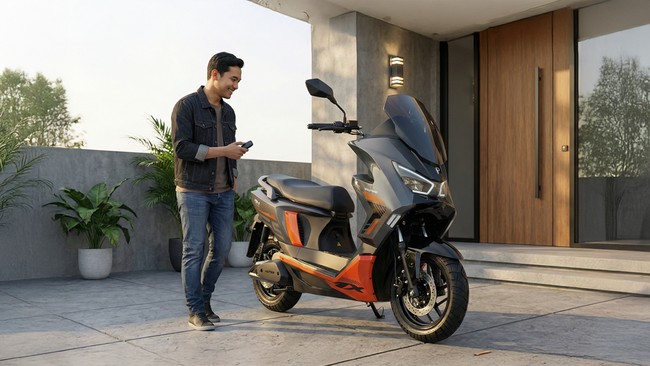
Geopolitical unrest in the Middle East is beginning to spark concerns over rising fuel prices in Indonesia, although the government is currently managing to keep them in check. This situation is also drawing attention from the electric vehicle industry, whose presence is still developing in the country.
Amid these conditions, electric motorcycle manufacturer ALVA perceives a shift in market dynamics. Although it has not yet disclosed detailed sales figures, the company detects strong signals of increasing consumer interest.
“For specific sales growth figures, we are unable to provide internal data at this stage. What we can share is that we observe increasingly active consumer interactions and more in-depth inquiries, which serve as strong signals that market interest is genuinely growing,” said Purbaja Pantja, Chief Executive Officer of ALVA, to CNBC Indonesia on Monday (13/4/2026).
In the field, the issue of rising energy prices is said to further reinforce the relevance of electric vehicles. However, this push is more of an initial trigger than the primary factor in purchasing decisions.
“Currently, we see that the issue of rising energy prices does indeed strengthen the relevance of electric motorcycles in consumers’ eyes, which is starting to encourage people to be more rational in calculating daily vehicle operating costs,” said Purbaja.
On the other hand, consumer decisions are still influenced by a broader range of aspects. Not just fuel prices, but also ecosystem readiness and user comfort.
“Consumer decisions to buy electric motorcycles are still influenced by several factors simultaneously, from usage cost efficiency, ecosystem readiness such as boost charge stations and after-sales services, ease of ownership, to a sense of safety in daily use,” he explained.
ALVA also emphasises that this momentum is not merely a temporary surge, but an opportunity to strengthen market education regarding electric vehicles as a long-term solution.
“ALVA views this momentum as an opportunity to continue educating the market that electric motorcycles are not just an alternative when fuel prices rise, but a long-term mobility solution that is more efficient and relevant for the daily lives of Indonesians,” added Purbaja.
Furthermore, changes in consumer behaviour are starting to become evident, particularly in urban areas. Consumers are now no longer just comparing purchase prices, but calculating total long-term usage costs.
“There are indications that consumers are now more open to comparing electric motorcycles with conventional ones, especially in terms of total operating costs and daily usage practicality,” he revealed.
Daily commuters are one of the groups most responsive to this change, followed by consumers with a more digital lifestyle who are adaptive to new technology.
“In addition, consumer segments accustomed to a digital lifestyle also tend to adopt electric motorcycles more quickly because they see vehicles not only as a means of transportation, but as part of a more modern, practical, and connected mobility ecosystem,” said Purbaja.
As market literacy increases, consumer question patterns are also changing. This serves as an indicator that the market is moving towards a more mature phase.
“For ALVA, this behavioural change is also increasingly evident when consumers no longer just ask about unit prices, but start inquiring in more detail about charging costs, range, availability of boost charge stations, after-sales services, and financing schemes. That shows the market is becoming more mature,” he said.