
Global Crude Oil Prices Soar, Reaching US$100 per Barrel
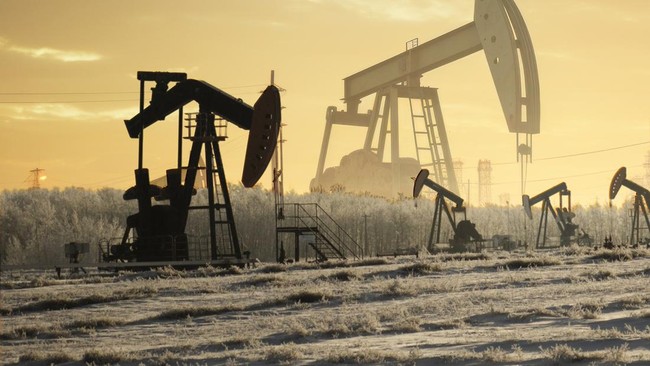
Global crude oil prices have experienced significant volatility this week, reaching levels above US$100 per barrel—a threshold last touched during Russia’s invasion of Ukraine in 2022.
This latest surge reflects a sharp spike as supplies from the Middle East have been disrupted owing to the Iran conflict, which has resulted in the closure of the Strait of Hormuz, the world’s primary oil distribution corridor. According to Refinitiv data, Brent crude is trading at US$103.14 per barrel, representing a 2.67% increase from the previous trading day, whilst US West Texas Intermediate (WTI) crude stands at US$98.71 per barrel, up 3.11%. On a weekly basis, both Brent and WTI have surged 11.27% and 8.59% respectively.
At the beginning of this week on Monday (9 March 2026), Brent and WTI crude reached intraday highs of US$119.50 and US$119.48 per barrel respectively, though they closed lower at US$98.96 per barrel (+6.76%) and US$94.77 per barrel (+4.26%). The spike that day was triggered by production cuts announced by major Middle Eastern producers as the Strait of Hormuz—the vital conduit for global energy shipments—remained closed.
Kuwait, the fifth-largest OPEC oil producer, announced on Saturday that it was cutting crude oil production and refinery output as a precautionary measure following Iran’s threats to shipping security in the Strait of Hormuz. However, Kuwait Petroleum Corporation did not specify the magnitude of the production reductions.
Iraqi oil production has reportedly experienced a sharp collapse. Three industry officials told Reuters that output from three major oilfields in southern Iraq has fallen approximately 70% to just 1.3 million barrels per day (bpd). Before the conflict with Iran erupted, these fields had been producing around 4.3 million bpd.
The United Arab Emirates has stated it is carefully managing offshore oil production to adjust storage capacity. Abu Dhabi’s national oil company, ADNOC, reported that onshore production operations continue to function normally.
Gulf states have begun reducing production owing to increasingly limited storage capacity. The closure of the Strait of Hormuz has discouraged many tanker operators from transiting the passage due to fears of Iranian attacks. Notably, approximately 20% of global oil consumption is typically exported through this narrow waterway.
Amidst ongoing tensions, the US government remains optimistic that the Strait of Hormuz shipping lane will reopen within the near term. US Energy Secretary Chris Wright stated that tanker traffic is expected to return to normal once Iran’s capability to threaten shipping has been sufficiently weakened. “We won’t be much longer before we see ship traffic beginning to return more to normal through the Strait of Hormuz,” Wright said in an interview with CNN.
Nevertheless, he cautioned that current conditions remain far from normal. “Traffic right now is still far from normal conditions. It will take time. However, in the worst-case scenario, this will only take a few weeks, not months,” he added.
Although crude oil prices surged at the start of this week, price movements throughout the week have been highly volatile. On Tuesday trading (10 March 2026), the benchmark crude oil prices cooled considerably. According to Refinitv data, Brent crude fell to US$87.80 per barrel, down 11.28% from the previous day, whilst WTI crude plummeted 11.94% to US$83.45 per barrel at market close.
This decline resulted from signals suggesting that Middle Eastern conflict may be subsiding. US President Donald Trump had indicated that war with Iran could end sooner than expected. This statement triggered significant profit-taking, causing crude prices to drop more than 11% in a single day—the steepest decline since 2022.
The market was then shocked by a Wall Street Journal report that the International Energy Agency (IEA) is proposing the largest release of strategic oil reserves in its history to counter potential supply disruptions from the Iran war. Should this plan be implemented, the volume could exceed the 182 million barrels released by IEA member countries in 2022 when Russia’s invasion of Ukraine roiled global energy markets.
This measure is under discussion among major developed nations’ leaders. French President Emmanuel Macron is scheduled to hold a virtual meeting with G7 leaders on Wednesday to discuss the Middle East conflict’s impact on energy markets and the possibility of tapping emergency reserves to curb price volatility.
However, the sentiment cooling crude prices proved short-lived. Crude prices advanced over the subsequent three trading days and closed above US$100 per barrel on Friday of this week. The rally was driven by escalating tensions when military conflict in the Gulf region sparked renewed concerns about global oil supplies.
According to reports on Saturday (14 March 2026), Iran has escalated attacks against ships and energy facilities in the Middle East. Two tankers caught fire in Iraqi waters after being struck by explosive-laden vessels allegedly controlled by Iran. These attacks triggered a major fire at sea near Basra and halted operations at multiple oil terminals. Tensions have also extended to the Strait of Hormuz, the critical global energy corridor that transports approximately one-fifth of the world’s oil supply.