
Global Crude Oil Price Breaches US$100 per Barrel; What Does This Mean for Indonesian Fuel Prices?
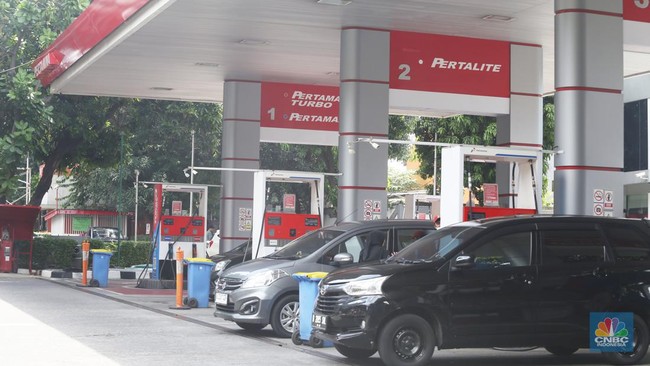
Jakarta, CNBC Indonesia - Global crude oil prices rebounded above US$100 per barrel during morning trading on Tuesday, 17 March 2026, following a sharp correction in the previous session.
Market concerns over global supply disruptions have resurfaced amid disruptions to vital energy corridors in the Middle East caused by ongoing regional conflicts.
According to Refinitiv data on Tuesday, 17 March 2026 at 09:10 WIB, Brent crude oil was trading at US$103.05 per barrel, whilst West Texas Intermediate (WTI) stood at US$95.96 per barrel. Both marked significant increases compared to the previous day’s close, when Brent and WTI had closed at US$100.21 and US$93.50 per barrel respectively.
With oil prices continuing to surge, the question arises regarding the fate of Indonesia’s fuel prices, particularly subsidised fuel types such as Pertalite (RON 90) and subsidised diesel. This is especially pertinent given that current global oil prices have far exceeded the Indonesian crude oil price (ICP) assumption set in the 2026 state budget at US$70 per barrel.
On this matter, Minister of Energy and Mineral Resources Bahlil Lahadalia stated that the government will continue to provide subsidies for fuel prices to the public, particularly for subsidised fuel types.
“Regarding prices, the state will continue to provide subsidies. We will certainly be present. As for the subsidy price level, we will monitor geopolitical developments. At the current US$100 price point, with the budget assumption at US$70 per barrel, if prices reach US$100, it should still be manageable within the state budget framework, with flexibility available. However, this is still under discussion,” he explained during an interview at the Ministry of Energy and Mineral Resources in Jakarta on Tuesday, 17 March 2026.
Bahlil further reassured the public that the government ensures the availability of fuel, LPG, and electricity under controlled conditions, in accordance with national minimum stock standards, despite current global geopolitical uncertainties.
“Alhamdulillah, even amid geopolitical conditions where there are as yet no signs that the Middle East conflict will end soon, we have received some positive developments. The Strait of Hormuz is now seeing a policy of intermittent opening and closing, meaning that non-Israeli and non-American vessels and countries can now communicate. This is actually a positive development,” he explained.
“Secondly, as I have conveyed to media colleagues in recent days, fuel, LPG, and electricity availability for Indonesia are all under controlled conditions, safe, and in accordance with our national minimum stock standards,” he said.
“Regarding LPG, we will also have additional supplies arriving towards the end of this month. So things are relatively satisfactory and there should be no issues for the religious holidays. Coal supplies for state electricity company PLN average around 14-15 days, which meets our national minimum standard. So there is relatively no concern there,” he noted.
“Jet fuel is also under our monitoring and we are in good communication with Pertamina; it is also under controlled conditions,” he added.
He mentioned that the government is examining several measures to economise fuel consumption, including discussions about working from home (WFH).
“There are several steps that will be taken but are currently under review, including whether we need to implement WFH. However, in my view, all possibilities are feasible. What is important is economising on fuel consumption. Beyond saving on imports, this also reduces expenditure for the Indonesian people,” he explained.